
Musty odors from vents when the AC runs signal mold in Houston HVAC systems. Our NADCA-certified technicians respond promptly and offer finance support to help restore your indoor air quality. Unexplained allergy flare-ups or respiratory issues when the system operates confirm contamination. Team Home Solutions provides thorough mold remediation for lasting peace of mind.
Why is Houston’s climate so hard on HVAC systems?
Houston’s Gulf Coast climate creates near-perfect conditions for mold inside HVAC systems. Warm temperatures, relentless humidity, and year-round AC operation combine to turn air handlers and ductwork into mold incubators. Without proactive intervention, homeowners face declining indoor air quality and potential health consequences for everyone under the roof.
What three things does mold need to grow inside an AC system?
Mold requires moisture, a food source, and warm temperatures. A Houston air conditioning system supplies all three. Dust accumulating on coils and inside ductwork provides the organic food source. The dark, enclosed spaces inside air handlers maintain consistently warm conditions. Moisture enters the picture every time the system cycles on.
The evaporator coil pulls water out of humid Gulf Coast air whenever the AC runs. In Houston, the AC runs most of the year. That means the coil stays wet for months on end, creating a persistent damp environment where mold spores settle and multiply. Condensation also forms inside air ducts, especially during the rainy season or after water damage events. Poor drainage compounds the problem, trapping water where it should never linger.
Why does Houston’s rainy season make ductwork mold worse?
Heavy rainfall drives outdoor humidity to saturation levels. That moisture infiltrates homes through crawl spaces, foundation cracks, and even open doors. Inside the ductwork, condensation increases dramatically. The warm, humid climate of the Gulf Coast creates the perfect environment for mold growth inside HVAC systems, particularly during these wet months. Once established, colonies spread spores through every vent each time the blower activates.
Team Home Solutions is your locally trusted mold expert serving Northwest Houston and the surrounding suburbs. The combination of saturated outdoor air and continuously running AC systems overwhelms normal moisture management. Homeowners who delay inspection risk the health risks of mold escalating from minor irritation to chronic respiratory issues. How can I tell if my HVAC system is causing mold growth in my home becomes the urgent question, and the answer starts with recognizing that Houston’s climate never lets up on your air conditioning equipment.
What are the visual signs of mold in my air ducts?
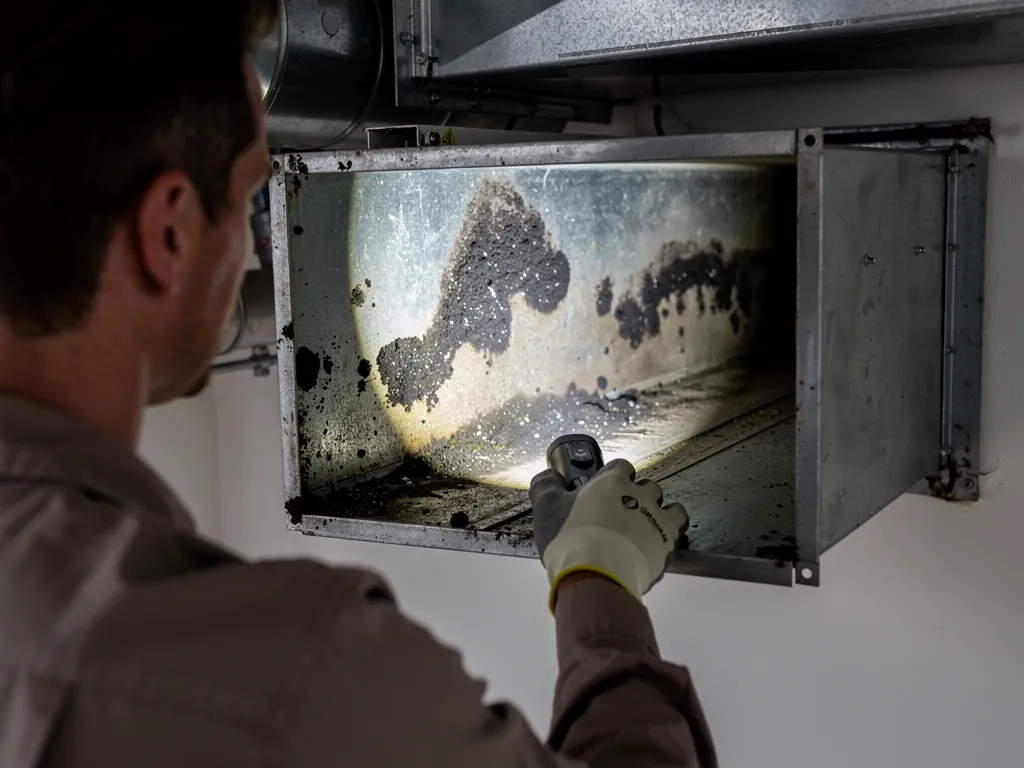
Visible mold growth inside the ductwork itself is the most obvious indicator of a problem. Professional mold inspections use advanced moisture detection, thermal imaging, and air quality testing to locate colonies. These patches often appear fuzzy or slimy. Finding them means mold has already established a foothold in your system.
Where should I look for visible mold in my HVAC system?
The best inspection points are near return air intakes and at the HVAC unit. These areas are accessible and tend to collect the most condensation. Mold thrives where moisture and dust accumulate undisturbed.
Why does mold grow inside Houston air ducts?
Houston’s climate creates ideal conditions for ductwork mold. Ducts running through hot attics sweat when cold air passes through them. That condensation provides the moisture mold needs to grow. Combine this with the dust that naturally collects inside ductwork, and you have a perfect environment for fungal growth. Without intervention, the problem spreads through every vent in your home.
The appearance of the growth varies. Some patches look like dark powder. Others present as slimy, wet films. Both types release spores into your airflow. Our HVAC mold removal and duct cleaning services target this contamination at its source. We remove the visible growth and treat the surfaces to prevent recurrence. Ignoring these visual signs allows the colony to expand deeper into the system. That expansion forces more spores through your living spaces every time the air conditioner cycles on.
How can I tell if my HVAC system is causing mold growth in my home?
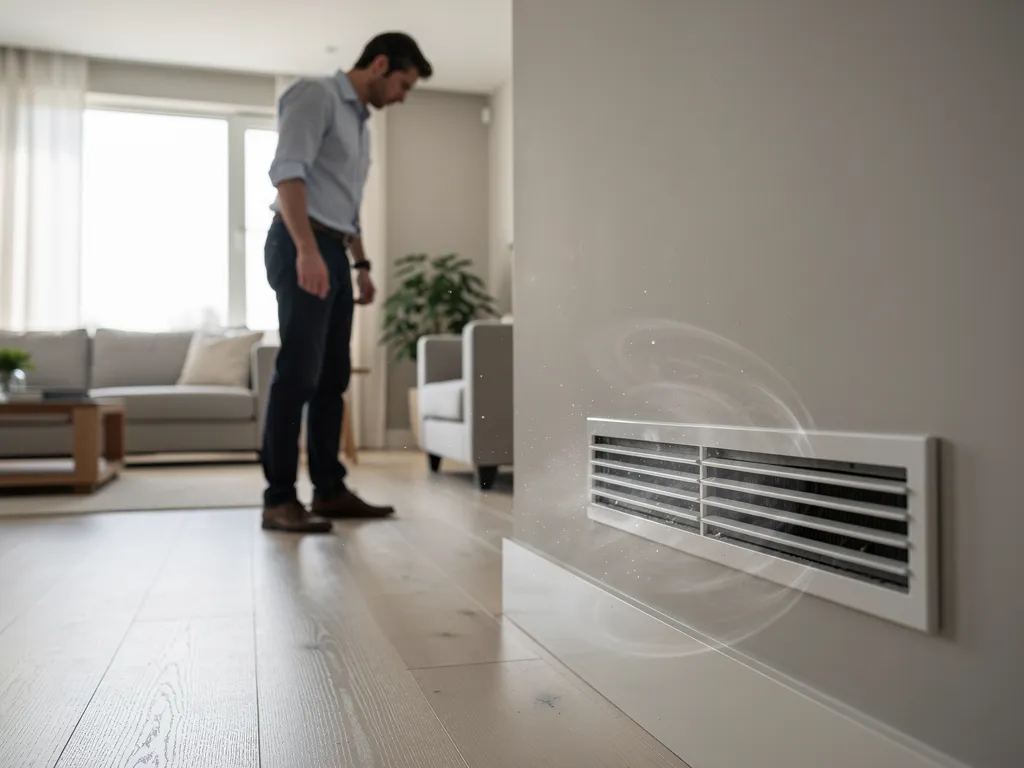
A mold problem inside an HVAC system announces itself through persistent odors and unexplained health symptoms. Missing these indicators allows mold to spread through every room the system serves, multiplying the cost and health impact.
What does HVAC mold smell like?
The odor is the most reliable early signal. A musty, earthy smell that intensifies when the air conditioner cycles on points directly to microbial growth inside the ductwork or on the evaporator coil. This smell does not fade with air fresheners or open windows. It returns every time the blower pushes air across contaminated surfaces. In Houston’s humid climate, that damp, basement-like scent often means condensation inside the system has created a breeding ground.
Can my HVAC system make my allergies worse?
Unexplained respiratory irritation is another common red flag. When family members experience persistent coughing, throat irritation, or allergy flare-ups that ease when they leave the house, the circulating air is a likely carrier. Mold growth inside the system releases spores into the airflow. Those spores trigger reactions that mimic seasonal allergies but never fully resolve. Other physical signs demand immediate attention. Standing water or frequent overflows in the condensate drain pan signal a clog that traps moisture exactly where mold thrives. A spike in indoor humidity or rooms that feel muggy despite the AC running also suggest the system is no longer managing moisture effectively. For a deeper look at the removal process, our mold removal from air ducts guide walks through professional cleaning steps.
What visible signs should I check around my HVAC unit?
Visible growth on vent covers, inside accessible duct openings, or on the equipment itself confirms a problem that has already advanced. Even without visible mold, the combination of musty odors and health symptoms warrants a professional inspection.
Why do DIY fixes often fail for HVAC mold?
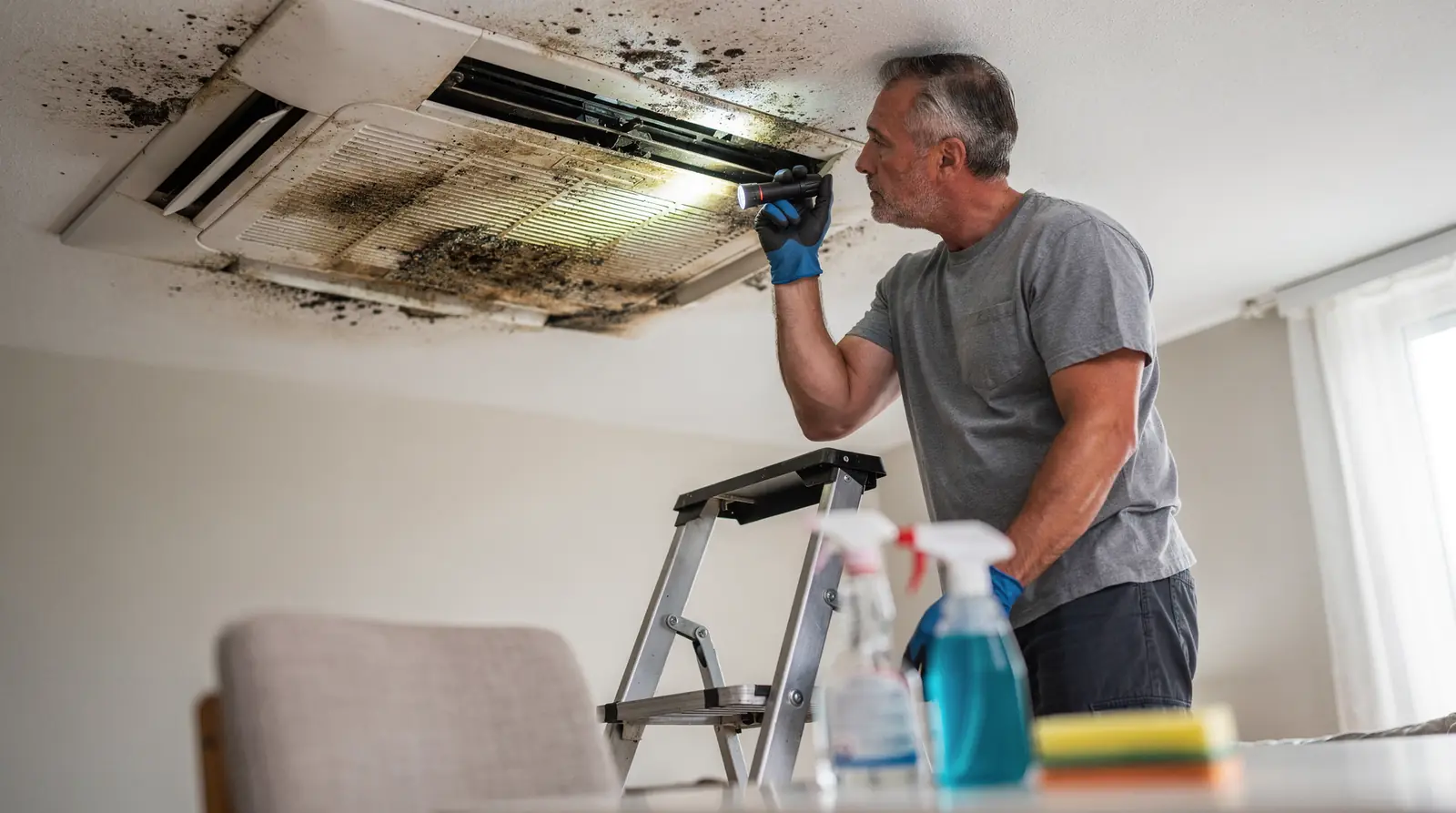
DIY mold treatments fail because they address surface symptoms while ignoring the root cause. Many Houston homeowners act on myths that waste money or make the mold problem worse, according to HVAC Mold Removal Houston. Spraying bleach into a vent grille or running a chemical fogger through the system never reaches the real problem. Mold colonizes deep inside ductwork, plenums, and around the evaporator coil where moisture condenses daily in our Gulf Coast climate.
What do most homeowners get wrong about HVAC mold?
The biggest mistake is treating visible mold as the full extent of the problem. Surface cleaning kills what you can see. It does nothing for spores embedded in fiberglass duct lining or growing on the back side of the coil. Houston’s humidity feeds these hidden colonies continuously. Without removing the moisture source and the contaminated material, regrowth happens within weeks.
Why can’t chemical sprays solve the problem?
Chemical foggers and spray treatments lack the reach and mechanical action required for complete remediation. Mold roots penetrate porous surfaces inside your ductwork. A mist of biocide cannot extract those hyphae or remove the dead spores that still trigger allergic reactions. Professional mold inspection using advanced moisture detection, thermal imaging, and air quality testing locates contamination at its source. Our certified mold remediation for HVAC systems follows protocols that physically remove colonized materials and treat affected surfaces. This approach restores safe indoor air and prevents recurrence. Half-measures leave your family breathing compromised air every time the AC cycles on.
What professional steps restore clean air in my home?
Professional HVAC mold removal eliminates contamination at its source. Our certified technicians clean air ducts, plenums, and HVAC components to stop mold from circulating through your Houston home.
What does professional HVAC mold removal include?
The process targets every surface where mold takes hold. We remove visible growth from ductwork interiors and sanitize evaporator coils where condensation feeds fungal colonies. Air handler interiors and drain pans receive the same thorough treatment. No component gets overlooked.
How do professionals keep mold from coming back?
Root-cause correction makes the difference between temporary relief and lasting results. We clear clogged drain lines that trap standing water inside your system. Moisture drives every mold problem, and Houston’s humidity supplies it relentlessly. Our professional mold remediation process addresses both the contamination and the conditions that created it. Without fixing the moisture source, even the most thorough cleaning fails within months.
Air duct cleaning paired with coil sanitization restores healthy airflow throughout your home. Our technicians respond quickly to service calls across Northwest Houston and the surrounding suburbs. Finance support removes the barrier between you and cleaner indoor air. The peace of mind guarantee backs every step of the work.
Frequently Asked Questions
How long does it take to remove mold from an HVAC system?
Most professional HVAC mold remediation projects take one to two days, depending on the extent of contamination and the size of your ductwork. Our certified technicians assess the scope during inspection and give you a clear timeline before work begins.
Can I just replace my air filter to stop HVAC mold?
A new filter helps capture airborne particles, but it cannot remove mold already growing on the evaporator coil, inside ductwork, or around the drain pan. Addressing the moisture source and cleaning contaminated surfaces is the only way to stop regrowth.
Is it safe to run my AC if I suspect mold in the ductwork?
Running the system circulates mold spores into every room it serves, which can worsen allergy symptoms and respiratory irritation. We recommend scheduling a professional inspection promptly rather than continuing to run a contaminated system.
How much does HVAC mold remediation cost in Houston?
Cost depends on the extent of contamination, the size of your ductwork, and whether moisture sources like a clogged drain line need correcting. We provide a clear assessment and finance support options so you understand the investment before work begins.
Does homeowners insurance cover HVAC mold remediation?
Coverage varies by policy and depends on the cause of the moisture intrusion. We recommend reviewing your policy details with your insurance provider, and our team can help document the condition of your system during inspection.
Conclusion
Recognizing these signs early gives you the power to act before mold compromises your home’s air quality and your family’s health. A professional inspection confirms the source and scope of contamination, while thorough remediation removes the growth and corrects the moisture conditions that allow it to return. Schedule an inspection today to restore clean, safe airflow throughout your home.