
Mold Removal From Air Ducts: Houston Guide
When it comes to Mold Removal From Air Ducts, professional HVAC technicians remove mold from air ducts using NADCA-certified methods: sealing the system, applying EPA-registered antimicrob
Professional Mold Remediation: turn off the HVAC system, wear protective gear, then inspect ducts for visible mold. Clean using a HEPA vacuum with a mold-killing solution, replace filters, seal leaks, and contact a local mold remediation expert for assistance, as guarantees vary by provider.
Removing mold from Houston air ducts requires professional cleaning, not bleach or DIY sprays. Team-Homesolutions.Com inspects the full HVAC system, identifies moisture sources feeding growth, then removes contaminated debris and sanitizes ductwork thoroughly. We serve Northwest Houston and surrounding suburbs. Every job carries our peace of mind guarantee for lasting, healthier indoor air.
Is Mold Growing In Your Air Ducts?
A musty odor drifting through the vents the moment the furnace or AC kicks on signals mold growing inside the ductwork. We treat that smell as an early alarm, not a minor annoyance. Houston’s humidity makes this problem far more common here than in drier climates. High moisture levels push mold spores directly into HVAC systems throughout the region.
Moisture is the real culprit behind duct mold. Leaks, condensation, and everyday humidity build up inside the ducts, creating the damp, dark environment mold spores need to settle and spread. Once mold takes hold, every cycle of the HVAC system carries spores into every room of the house.
What symptoms suggest mold in the ducts?
Beyond the musty smell, we watch for a few consistent warning signs in Houston homes:
- Persistent stale or musty odor that returns after cleaning
- Unexplained allergy symptoms or respiratory irritation that worsen indoors
- Visible dark specks or dust clusters near vent covers
- Increased coughing or sinus trouble when the AC runs
Can mold spread through a house without visible signs?
Yes. Mold removal from air ducts often becomes urgent precisely because spores travel invisibly through moving air. A household may notice symptoms long before any visible growth appears near a vent, which is why we recommend a professional inspection at the first hint of musty odor.

What Do You Need Before You Start?
Two things come first: shutting down power to the HVAC system and gearing up with proper protective equipment. Skipping this step exposes Houston homeowners to airborne spores the moment ducts are opened. We never begin mold removal from air ducts without confirming the system is fully powered off and technicians are wearing respirators, gloves, and eye protection. Musty odors and dusty vents feel urgent. Rushing in unprotected turns a manageable problem into a health risk for everyone in the house.
Once the system is safely off, the next task is a direct look inside. Our team accesses supply and return vents throughout the home and inspects the visible ductwork for mold growth, discoloration, or moisture staining. This step tells us whether the issue is isolated to one register or has spread across the whole system, which shapes everything that follows.
How do we know it’s actually mold and not just dust?
Visible inspection alone rarely settles the question. We rely on advanced moisture detection, thermal imaging, and air quality testing to locate mold at its actual source, rather than guessing from a musty smell alone. cite-3 Houston’s humidity makes hidden moisture common, so testing catches problems a flashlight check would miss.
What should we prepare before a technician arrives?
- Note where odors or dust seem strongest in the home.
- Avoid running the HVAC system until inspection is complete.
- Keep pets and family members away from affected rooms.
- Have recent utility or allergy symptoms ready to mention during the visit.
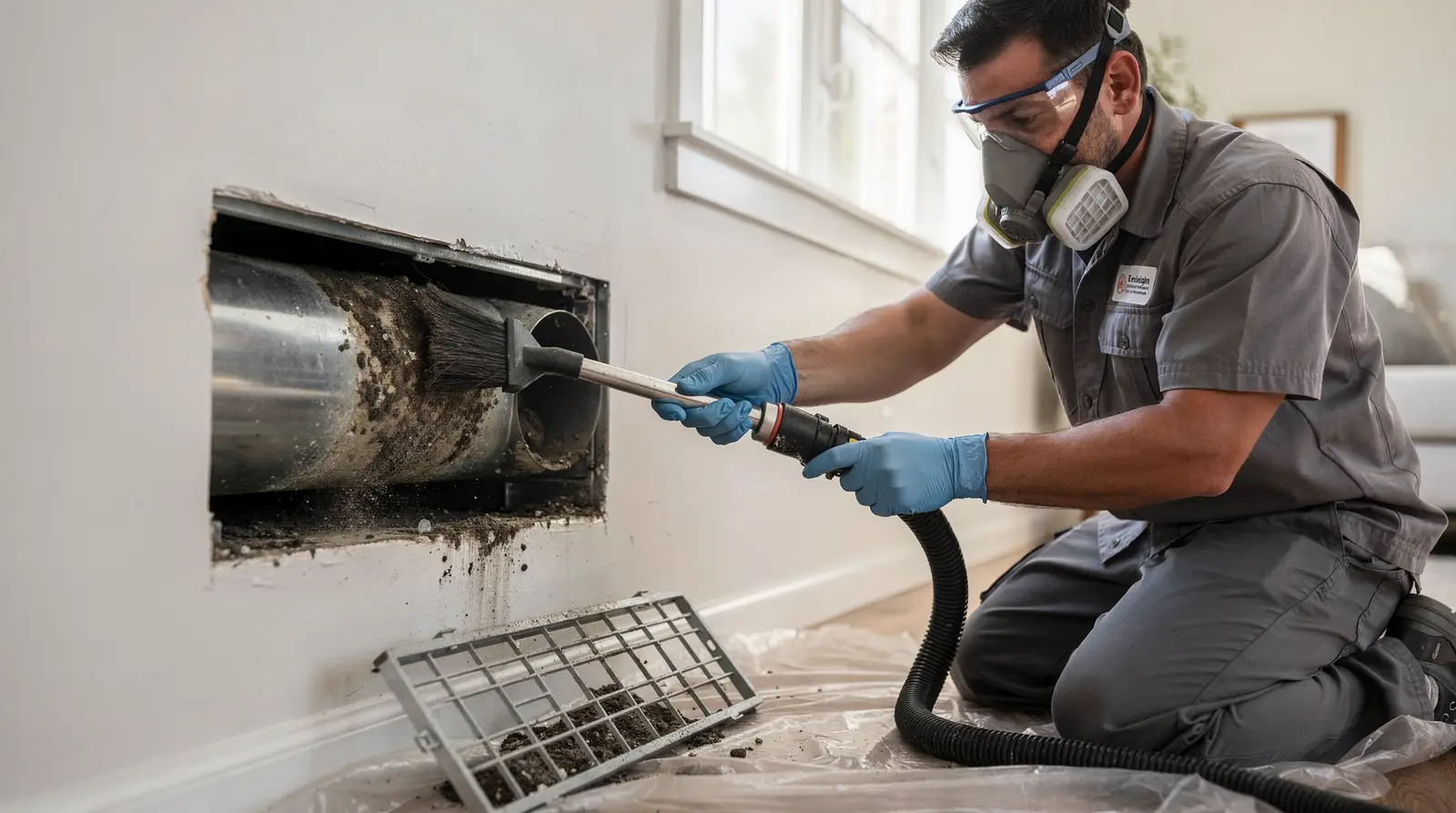
How Do You Clean Mold Out Of Ducts?
Proper duct cleaning follows a specific sequence, not a quick wipe-down of the vent covers. Houston homeowners who skip steps often see musty odors return within weeks because surface dust gets removed while spores stay embedded deep in the ductwork. Our technicians follow a proven process built for the humidity and HVAC demands typical of Houston homes.
Mold removal from air ducts starts with the right tools, not just any vacuum and a rag. Follow these steps in order:
- Shut off the HVAC system completely before any work begins, and put on protective gear including a respirator mask and gloves.
- Inspect the ductwork, plenums, and vent covers for visible mold growth, water staining, or condensation buildup.
- Clean every affected surface using a HEPA-filtered vacuum combined with a mold-killing solution designed to eliminate spores, not just loosen dust.
- Replace all air filters throughout the system once cleaning finishes.
- Seal any leaks found in the ductwork, since gaps let humid Houston air back in and invite new mold growth.
- Schedule a follow-up professional inspection if musty smells, allergy flare-ups, or visible debris persist after the cleaning is complete.
A HEPA vacuum matters more than most homeowners realize. Standard vacuums push fine spores back into the airstream instead of trapping them, which spreads contamination further through the home.
Can I clean mold out of air ducts myself?
Small, isolated spots near a single vent register are sometimes manageable with careful HEPA vacuuming and a mold-killing product. Widespread growth throughout the duct system requires equipment and expertise most households don’t have on hand. We recommend a professional evaluation before attempting DIY work on anything beyond minor surface staining.
Why does mold keep coming back after cleaning?
Mold returns when moisture sources go unaddressed, such as unsealed duct leaks or unreplaced filters that trap residual spores. Our approach targets the entire system with careful, thorough handling, treating the root cause rather than spot-cleaning visible areas alone. That whole-system focus is what keeps Houston homes clear long after the initial service.
When Should A Houston Pro Step In?
A musty odor that lingers after cleaning the vent covers signals a problem deeper than the surface. Houston’s humidity pushes moisture into plenums and ductwork. Once mold colonizes those spaces, wiping down a register does nothing to solve it. We built our approach around eliminating growth from the entire HVAC system, not just what’s visible.
How do we know if duct mold needs professional removal?
Certain warning signs mean a homeowner has moved past the do-it-yourself stage. Follow these steps to decide:
- Check whether the musty smell returns within days of cleaning — recurring odor points to hidden growth inside ducts or plenums.
- Note any allergy flare-ups, coughing, or headaches that ease when away from home; these suggest air quality has already been compromised.
- Inspect vents for dust that looks discolored or clumped rather than dry and gray.
- Call a certified team once any of these signs appear, since removing mold from air ducts requires specialized containment and equipment homeowners rarely have.
What happens once a Houston technician arrives?
Our certified technicians respond quickly and offer financing support, so cost concerns never delay treatment. We inspect the full system, then remove contamination at its source rather than masking the smell.
Full remediation restores healthier air throughout the home, not a temporary fix. Left untreated, duct mold keeps circulating spores every time the HVAC system runs, and that constant exposure affects breathing, sleep, and overall comfort for the whole household. Waiting rarely makes the problem smaller — it spreads further into the system.
What Mistakes Let Duct Mold Return?
Four recurring errors bring mold back into Houston homes after a supposed cleanup. Dark, damp conditions inside ductwork give spores everything needed to regrow, and a surface wipe-down rarely reaches the source. We see this pattern across Northwest Houston and its suburbs, where humidity keeps ducts vulnerable year-round.
The most damaging mistake is stopping at symptoms instead of the root cause. Effective mold removal from air ducts requires addressing the moisture source, not just the visible growth. Homeowners who hire a crew for a quick vacuum-and-spray job often watch the same musty odor return within weeks.
Why Does Mold Keep Coming Back After Cleaning?
Mold returns because leftover moisture and unsealed leaks recreate the exact environment mold needs. Skipping filter replacement after treatment also lets trapped spores recirculate through the system.
Does a Satisfaction Guarantee Actually Matter?
Choosing a provider without a satisfaction guarantee leaves Houston homeowners with no recourse if mold resurfaces after payment. A guarantee signals accountability and a plan to return if the problem isn’t fully resolved.
To avoid repeat infestations, we recommend confirming these steps happen every time:
- Identify and correct the moisture source before cleaning begins.
- Treat the entire duct system, not just visible sections.
- Replace all air filters immediately after remediation.
- Seal any duct leaks discovered during inspection.
- Verify the service includes a written satisfaction guarantee.
Missing any single step invites mold’s return, often within the same season.
Mold in your air ducts demands professional attention to protect your home’s air quality and your family’s health. Team Home Solutions delivers thorough mold remediation backed by certified expertise and a commitment to lasting results. By addressing contamination at its source. Restoring your system’s integrity, you reclaim the clean, healthy indoor environment your home deserves. Trust our comprehensive approach to eliminate mold concerns and restore your peace of mind.
Frequently Asked Questions
How much does air duct mold remediation cost in Houston?
Cost depends on the extent of contamination, the size of the HVAC system, and whether moisture sources like leaks or condensation need repair. We inspect the full system first and provide a clear estimate before any work begins, and we offer financing support so cost doesn’t delay treatment.
How long does professional mold removal from air ducts take?
Most Houston homes take a single day for inspection, cleaning, filter replacement, and sealing, though widespread contamination or hard-to-reach ductwork can extend the timeline. We walk homeowners through the expected timeframe during the initial inspection.
Is it safe to run the HVAC system while mold is present in the ducts?
No. Running the system circulates spores into every room through the vents. We recommend shutting down the HVAC system as soon as musty odors or visible growth appear and leaving it off until a professional inspection is complete.
Will homeowners insurance cover mold remediation in air ducts?
Coverage varies by policy and the cause of the moisture, so we recommend checking with the insurance provider directly. Our team can document the inspection findings to support a claim if coverage applies.
How can Houston homeowners prevent mold from returning after duct cleaning?
Sealing duct leaks, replacing filters on schedule, and correcting the moisture source that fed the original growth are the key steps. Choosing a provider with a written satisfaction guarantee also ensures follow-up if mold resurfaces.
Conclusion
Mold in your air ducts is not a cosmetic nuisance — it’s a health and comfort issue that gets worse the longer it’s left unaddressed. Houston’s humidity makes duct mold especially common, but the fix is straightforward when it’s handled correctly: identify the moisture source, clean the entire system with the right tools, replace filters, seal leaks, and confirm the work with a satisfaction guarantee. Skipping any one of those steps is why so many households see the same musty odor return within weeks.
We built our process around treating the whole HVAC system, not just the parts you can see or smell. If your vents are carrying a musty smell, your allergies flare up when the AC runs, or you’ve noticed dark specks near a register, that’s your sign to get a professional inspection before the problem spreads further through your home.