
Discover Signs Your Air Ducts Need Cleaning or Mold Removal
When it comes to How Do I Know if My Air Ducts Need Cleaning or Mold Removal?, visible dust around vents, musty odors, rising energy bills, and allergy flare-ups signal trouble inside HVAC systems. NADCA recommends professional duct cleaning every three to five years, sooner after renovations or with no cleaning history. Our certified technicians inspect ducts for mold growth. Debris buildup, then recommend cleaning or full mold remediation based on findings.
What Will This Guide Help You Determine?
This guide gives Northwest Houston homeowners a clear path for figuring out whether dusty vents, odors, or rising energy bills point to a duct problem or something more serious growing inside the HVAC system. Confusing the two carries real cost: treating a mold issue like a simple cleaning job leaves spores circulating through every room. Ignoring a duct problem lets contaminants build for months. We built this resource around the diagnostic work our team already does every day across the surrounding suburbs.
Team Home Solutions serves homeowners throughout Northwest Houston and the surrounding communities. We approach every job by solving the root cause instead of masking symptoms. cite-1 That distinction matters here. A quick vent wipe-down might hide the real issue temporarily, but it won’t stop mold from spreading behind the walls.
How Do I Know if the Problem Is Bigger Than Dust?
Watch how quickly grime returns after cleaning. If areas around your registers and vents collect dust again within days, that pattern signals contamination building up inside the duct system itself, not just a surface nuisance.
What Should I Do Once I Spot a Warning Sign?
Contact certified technicians rather than guessing at the cause. Our team offers fast response times and finance support. Homeowners can move on air quality concerns without delay or added financial strain.
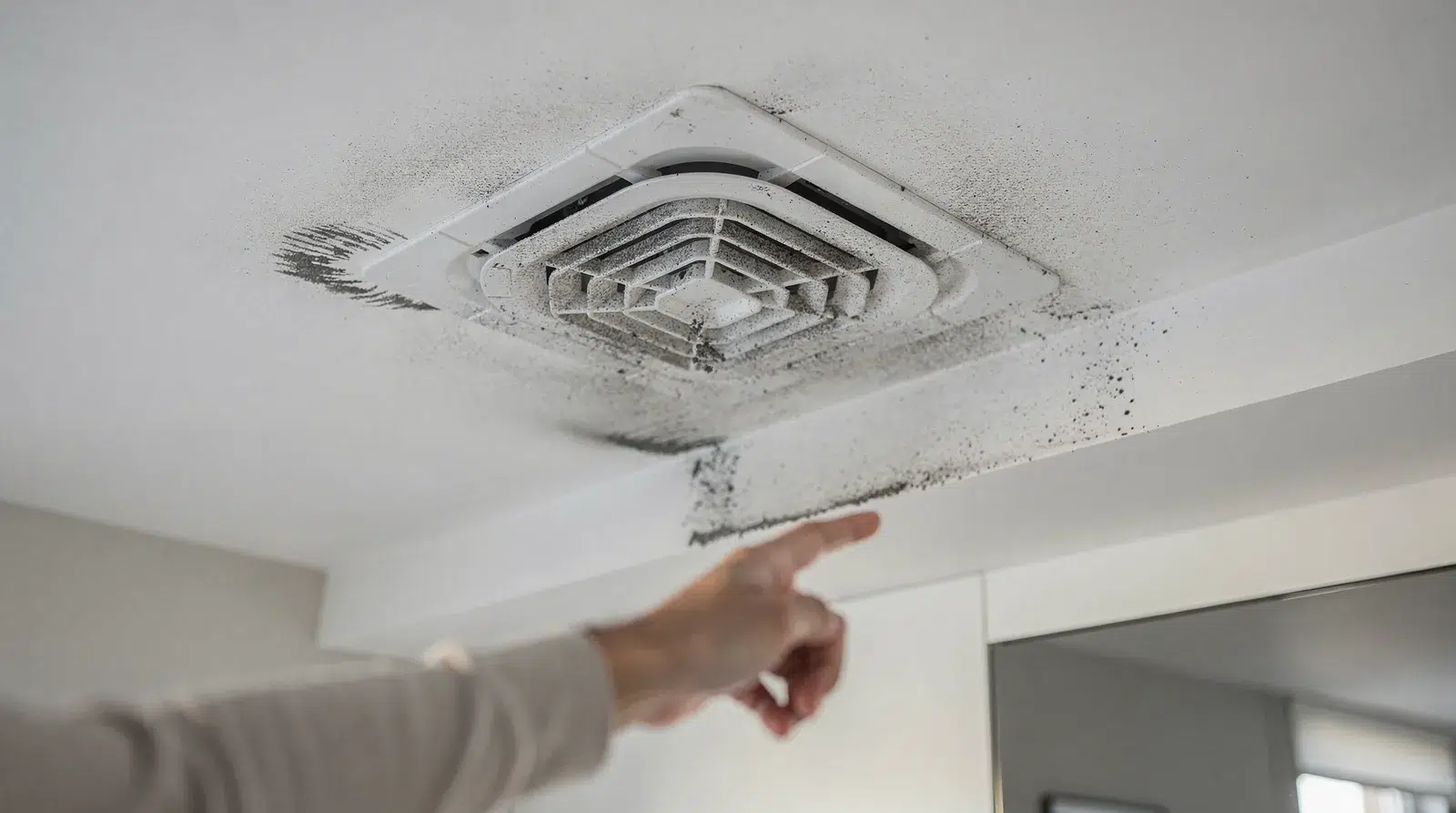
What Are the First Signs of Dirty Air Ducts?
Dust buildup around vent covers signals the earliest stage of duct contamination. Musty odors that linger after routine cleaning often follow close behind, warning of deeper indoor air quality problems. We treat these two symptoms as the clearest starting point when homeowners ask how do I know if my air ducts need cleaning or mold removal. Each points to a different root cause.
Dust and dirt trapped inside ductwork carry contaminants and air pollutants that lower indoor air quality throughout the home. That same buildup forces the HVAC system to work harder just to push air through, driving energy bills upward. We generally see three warning signs cluster together before homeowners call for help:
Visible dust rings forming around supply and return vents within days of cleaning
Weaker airflow at the vents despite a properly running blower
Rising utility costs without any change in thermostat settings
Visible dust rings forming around supply and return vents within days of cleaning
Weaker airflow at the vents despite a properly running blower
Rising utility costs without any change in thermostat settings
Does a Musty Smell Always Mean Mold?
Not always, but a musty odor that persists after standard cleaning deserves attention. We consider lingering musty odors a signal of indoor air quality issues that go beyond surface dust. Regular cleaning normally clears simple dust-related smells. cite-1 When the smell keeps returning, mold growth inside the ducts or plenum becomes a real possibility.
How Do We Tell Dust Apart From Mold Growth in Ducts?
Dust settles as a dry, gray film that wipes away easily from vent covers. Mold typically clings in darker patches. Returns even after wiping, often paired with a musty smell that dust alone does not produce. Our technicians inspect the plenum and duct interior directly. HVAC mold removal services target growth at its source rather than treating symptoms on the surface. Distinguishing between the two early prevents a simple cleaning job from turning into a larger remediation project down the road.

When Do Symptoms Point to Mold Instead of Dust?
Musty odors, dark staining near vents, and allergy flare-ups that worsen indoors often signal mold rather than ordinary dust. Homeowners trying to know if air ducts need cleaning or mold is the real problem should look past the surface symptoms. Consider what’s happening inside the system itself. Poorly maintained HVAC systems harbor mold, fungi, and bacteria that recirculate through the ductwork every time the blower kicks on. That distinction matters, because dust cleaning and mold remediation solve two very different problems.
Dust buildup responds to routine duct cleaning. Mold growth requires a different approach entirely. We remove mold at its source rather than masking the growth, which restores a genuinely healthier home instead of temporarily covering an odor. cite-1
How can we tell dust problems apart from mold problems?
We rely on professional inspection tools rather than guesswork. Our process combines moisture detection, thermal imaging, and air quality testing to confirm whether mold is actually driving the symptoms homeowners notice. cite-1
Symptom Pattern
Likely Cause
Fine dust, no odor, worsens with use
Duct debris buildup
Musty smell, visible dark spotting
Mold growth in ductwork
Allergy symptoms tied to humidity spikes
Moisture-driven mold
What should we do if we suspect mold in our ducts?
Schedule a professional inspection before booking any cleaning service.
Ask for moisture detection and air quality testing results, not a visual guess.
Choose remediation, not standard duct cleaning, if mold is confirmed.
Schedule a professional inspection before booking any cleaning service.
Ask for moisture detection and air quality testing results, not a visual guess.
Choose remediation, not standard duct cleaning, if mold is confirmed.
We never recommend surface cleaning when moisture and biological growth are present. Addressing the root cause protects both indoor air quality and long-term HVAC performance.
How Do You Confirm the Cause Before Booking Service?
Confirming the real culprit behind stale air, rising utility bills, or sneezing fits requires a trained eye, not a guess from across the room. Determining whether your air ducts need cleaning or mold removal starts with a professional inspection. Dust and mold produce overlapping symptoms but demand very different fixes. Team Home Solutions solves mold problems at the root level. Our inspections give homeowners a clear, evidence-based answer before any work begins.
We follow a straightforward process to separate a simple dust problem from a mold issue:
Document the symptoms — odor, allergy flare-ups, dust film, or a spike in energy bills.
Check the vents and cover plates for visible dust buildup or dark, spotty growth.
Review the duct’s cleaning history, since a system with no record of service is often overdue.
Inspect for moisture sources near the ductwork, since dampness signals mold rather than dust.
Match findings to a service: cleaning for dust and debris, remediation for confirmed mold.
Document the symptoms — odor, allergy flare-ups, dust film, or a spike in energy bills.
Check the vents and cover plates for visible dust buildup or dark, spotty growth.
Review the duct’s cleaning history, since a system with no record of service is often overdue.
Inspect for moisture sources near the ductwork, since dampness signals mold rather than dust.
Match findings to a service: cleaning for dust and debris, remediation for confirmed mold.
How often should air ducts be cleaned?
Industry guidance calls for professional duct cleaning every three to five years for most households. Homes with allergy sufferers or pets should shorten that window to every two to three years, since dander and dust accumulate faster.
What are the clearest warning signs service is overdue?
Visible dust or mold around the vent covers is the most obvious red flag. A sudden jump in energy bills, paired with no memory of ever scheduling a cleaning, points to the same conclusion: the system has gone too long without attention.
What Mistakes Should You Avoid When Diagnosing the Problem?
Delaying a professional evaluation ranks as the costliest mistake homeowners make. Dust, odors, and allergy flare-ups often get dismissed as minor annoyances rather than treated as warning signs. That delay gives small problems room to grow into expensive ones. Our certified technicians offer fast response times and finance support. Scheduling an evaluation promptly costs far less time and hassle than waiting.
Ignoring visible mold growth ranks as an equally serious error. Homeowners sometimes assume a quick wipe-down solves the issue. Surface cleaning does nothing to address what’s spreading inside the system. HVAC mold removal exists precisely because mold travels through ducts, plenums, and other components, often out of sight. Skipping professional remediation allows that growth to keep spreading long after the visible patch disappears.
Can I Just Clean the Ducts Myself and Skip an Inspection?
Attempting a DIY fix without diagnosing the underlying cause rarely solves the real problem. Dirty or damaged ductwork can break down over time. That deterioration sometimes creates hazardous air quality conditions inside the home. Cleaning alone does not repair structural damage or confirm whether mold is present.
What Happens if I Wait Too Long to Get an Assessment?
Waiting allows minor duct issues to progress into cracked, deteriorated, or contaminated ductwork. That progression raises health risks and repair costs simultaneously. The most reliable path forward involves these steps:
Note every symptom observed — dust patterns, odors, energy bill changes.
Schedule a professional inspection rather than guessing at the cause.
Request duct cleaning or mold remediation based on documented findings, not assumptions.
Note every symptom observed — dust patterns, odors, energy bill changes.
Schedule a professional inspection rather than guessing at the cause.
Request duct cleaning or mold remediation based on documented findings, not assumptions.
Recognizing the warning signs of contaminated air ducts protects your home’s air quality and your family’s health. Whether you’ve noticed visible mold growth, persistent odors, or unexplained respiratory issues, these indicators demand professional attention. Team Home Solutions delivers thorough inspections. Certified remediation to address problems at their source, restoring your confidence in the air you breathe. Don’t wait for symptoms to worsen—take action today to ensure your home remains a safe, healthy environment for everyone inside.
Frequently Asked Questions
How do I know if my air ducts need cleaning or mold removal?
Look at what’s driving the symptoms. Dust rings around vents, weaker airflow, and rising energy bills without a thermostat change usually point to ordinary debris buildup that responds to duct cleaning. Musty odors that return after cleaning, dark staining near vents, and allergy flare-ups tied to humidity spikes point to mold growth inside the ductwork, which needs remediation instead.
Can a musty smell from my vents mean something other than mold?
Yes. A musty smell that clears up after a routine cleaning is usually just trapped dust and dirt. If the odor keeps coming back after cleaning, that’s a strong signal of mold growing inside the ducts or plenum rather than a simple dust issue.
Is duct cleaning enough if I actually have mold in my HVAC system?
No. Standard duct cleaning addresses dust and debris, but it doesn’t remove mold at its source. If moisture detection, thermal imaging, or air quality testing confirms mold, we recommend remediation so the growth doesn’t keep recirculating through the system every time the blower runs.
How often should air ducts be cleaned to prevent these problems?
Most households should schedule professional duct cleaning every three to five years. Homes with pets or allergy sufferers should shorten that to every two to three years, since dander and dust build up faster and make symptoms harder to catch early.
What should I do first if I suspect mold instead of a simple dust problem?
Schedule a professional inspection before booking any cleaning service. Ask for moisture detection and air quality testing results rather than relying on a visual guess, then choose remediation over standard duct cleaning if mold is confirmed.
Conclusion
Telling dust apart from mold in your air ducts comes down to watching how symptoms behave, not just noticing they exist. Dust that returns quickly, weak airflow, and climbing energy bills usually point to a debris problem that routine cleaning resolves. Musty odors that persist, dark staining, and allergy symptoms tied to humidity point to something growing inside the system that cleaning alone won’t fix.
The safest move is never to guess. A professional inspection separates the two issues with real evidence, moisture detection, thermal imaging, and air quality testing, so you address the actual cause instead of masking a symptom. Team Home Solutions built our process around that principle: solve the root problem, whether it’s debris or mold, so your home’s air stays genuinely healthier, not just temporarily fresher.