When it comes to How Does Team Home Solutions Ensure Effective Mold Removal. Prevent Future Growth?, certified technicians at Team Home Solutions eliminate mold at its root source rather than masking surface growth, addressing moisture problems throughout Northwest Houston homes. Complete mold remediation combines source removal, thorough drying, and structural repair, backed by a peace of mind guarantee. This root-level approach stops recurrence, protecting indoor air quality and property value for years beyond initial treatment.
What Should You Prepare Before Removing Mold?
Proper preparation starts with identifying moisture sources and gathering the right protective equipment before any mold removal begins. Fungus growth develops in warm, damp corners of a home — bathrooms, kitchens, and basements top the list. Skipping this step lets spores spread further during cleanup, turning a contained problem into a whole-house issue.
Before touching a moldy surface, we recommend homeowners and property managers complete these steps in order:
Identify all affected areas. Walk through bathrooms, kitchens, and basements, checking for musty odors or discoloration.
Locate the moisture source. Mold returns quickly if the underlying dampness — a leaky pipe, poor ventilation, or slow drainage — stays unresolved.
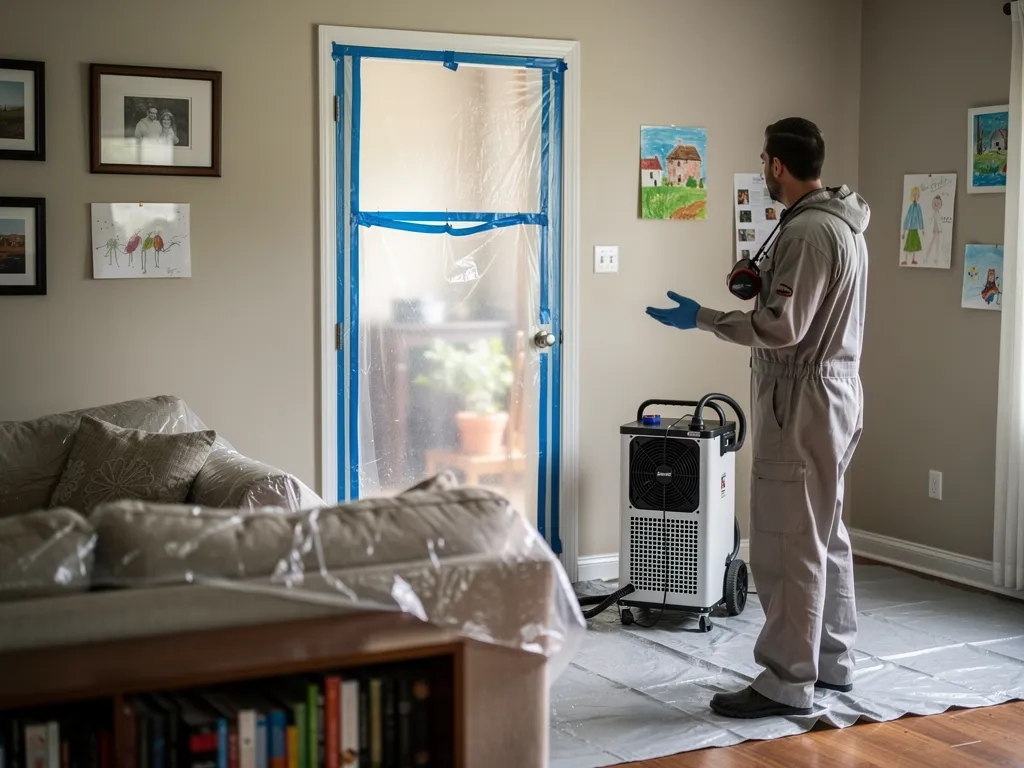
Isolate the space. Close doors and seal vents to keep spores from traveling to unaffected rooms.
Suit up in protective gear. Masks, gloves, and eye protection reduce exposure during inspection and cleanup.
Document the damage. Photos help track progress and support any conversation with a remediation team.
Identify all affected areas. Walk through bathrooms, kitchens, and basements, checking for musty odors or discoloration.
Locate the moisture source. Mold returns quickly if the underlying dampness — a leaky pipe, poor ventilation, or slow drainage — stays unresolved.
Isolate the space. Close doors and seal vents to keep spores from traveling to unaffected rooms.
Suit up in protective gear. Masks, gloves, and eye protection reduce exposure during inspection and cleanup.
Document the damage. Photos help track progress and support any conversation with a remediation team.
How do we know if a DIY approach is enough?
Small, isolated patches sometimes respond to careful homeowner cleanup, but widespread or recurring growth signals a deeper structural or moisture issue. Team Home Solutions serves as the locally trusted mold expert across Northwest Houston and its surrounding suburbs. We consistently see cases where surface cleaning masks a hidden source. Our approach targets that root cause rather than treating symptoms alone.
Why does preparation matter for long-term results?
Thorough prep work protects the household while setting the stage for lasting removal. As a locally owned, family-operated company, we prioritize transparent communication and prompt attention at every stage, backed by a peace of mind guarantee on every project we complete.
How Does Team Home Solutions Inspect for Mold?
Advanced moisture detection equipment, thermal imaging, and air quality testing form the backbone of every inspection we perform. These tools locate hidden moisture pockets behind drywall, under flooring, and inside HVAC systems before mold spreads further. Our approach to effective mold removal starts with pinpointing the exact source, not just the visible symptoms.
We follow a consistent process on every property we visit:
Walk the property to identify visible mold, musty odors, and past water damage.
Scan walls, ceilings, and floors with moisture meters to find damp zones invisible to the naked eye.
Apply thermal imaging to detect temperature differences that signal trapped moisture.
Conduct air quality testing to measure spore concentration throughout the home.
Document findings and outline a remediation plan tailored to the property.
Walk the property to identify visible mold, musty odors, and past water damage.
Scan walls, ceilings, and floors with moisture meters to find damp zones invisible to the naked eye.
Apply thermal imaging to detect temperature differences that signal trapped moisture.
Conduct air quality testing to measure spore concentration throughout the home.
Document findings and outline a remediation plan tailored to the property.
Certified technicians respond quickly once a homeowner reaches out. Finance support is available so the process can begin without financial delay. Speed matters here. Mold spreads fast in Houston’s humidity. Waiting even a few weeks can turn a small patch into a structural problem.
When Should a Homeowner Call a Professional Instead of Inspecting Alone?
Water damage covering more than roughly 10 square feet signals a job beyond do-it-yourself methods. Widespread growth tied to flooding or long-term leaks often hides deeper contamination that a visual check won’t catch. We recommend professional assessment whenever damage looks extensive or keeps returning after cleaning.
As Houston’s #1 Mold Remediation Experts, Team Home Solutions offers complete and certified mold remediation services: high humidity, aging ductwork, and frequent storm exposure. That local focus lets us design a prevent future growth strategy suited to each property, not a generic checklist.
What Are the Core Steps in Mold Remediation?
Five sequential actions define our remediation process, moving from containment through final restoration. Skipping any single step lets spores spread further, driving up repair costs and prolonging health risks for your household. We built this sequence to guarantee lasting results, not a temporary fix.
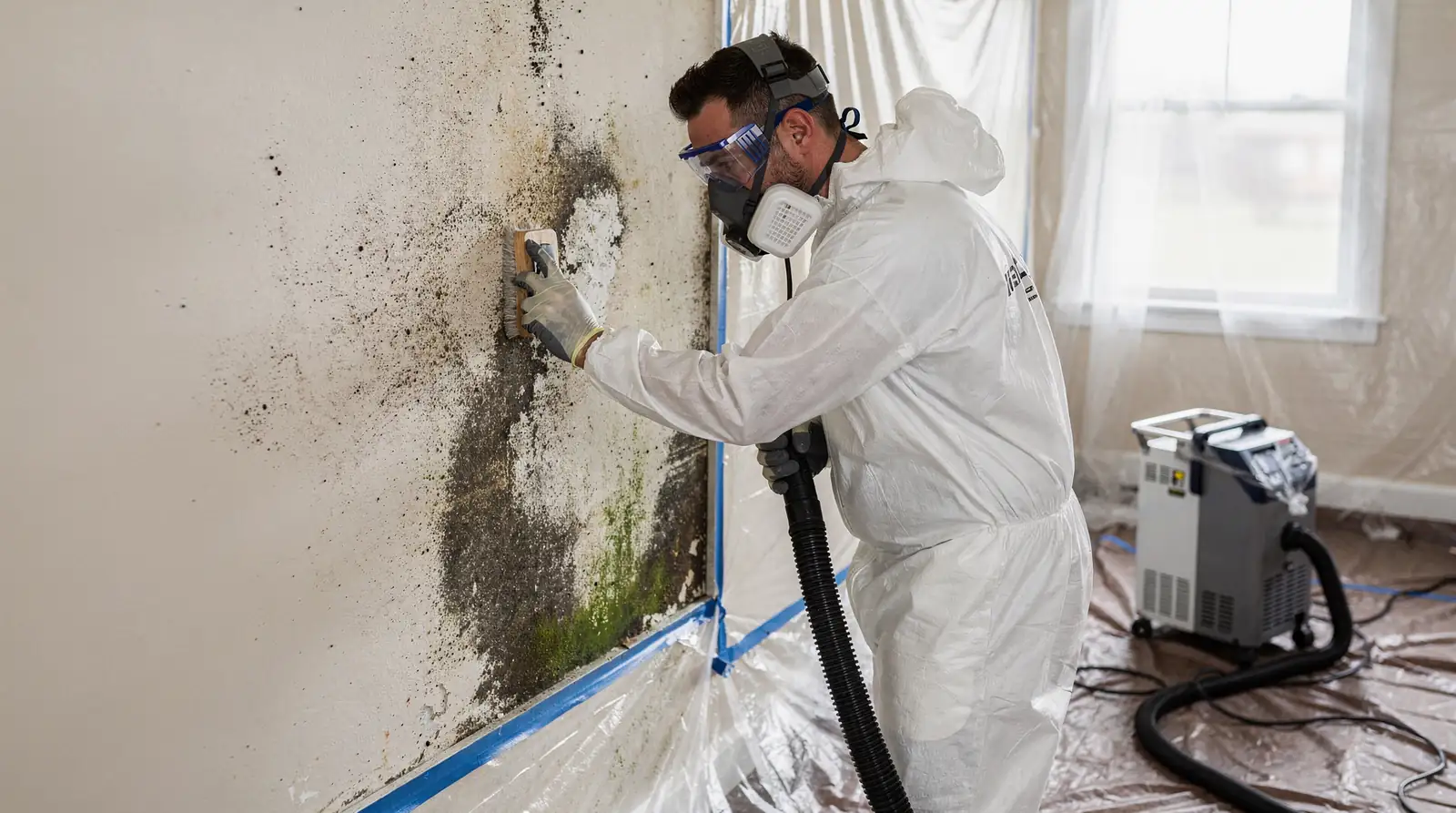
Before any work begins, we confirm the affected area and set containment barriers to stop spore migration into unaffected rooms. Our technicians then follow this order on every job:
Suit up in protective equipment, including an N-95 respirator, gloves, and sealed eyewear, to limit exposure to airborne spores during removal.
Isolate the contaminated zone with physical barriers and negative air pressure.
Remove mold at its source using effective mold removal techniques that target root-level contamination rather than surface symptoms.
Dispose of unsalvageable materials and clean remaining surfaces thoroughly.
Verify the space is dry and mold-free before closing out the job.
Suit up in protective equipment, including an N-95 respirator, gloves, and sealed eyewear, to limit exposure to airborne spores during removal.
Isolate the contaminated zone with physical barriers and negative air pressure.
Remove mold at its source using effective mold removal techniques that target root-level contamination rather than surface symptoms.
Dispose of unsalvageable materials and clean remaining surfaces thoroughly.
Verify the space is dry and mold-free before closing out the job.
Why remove mold at the source instead of just cleaning the surface?
Surface cleaning masks a problem that keeps growing behind walls or under flooring. We solve mold problems at the root level, backed by a peace of mind guarantee, so homeowners avoid repeat outbreaks. Structural moisture left unaddressed simply regrows mold within weeks.
Does remediation include repairing the damage mold caused?
Yes. Once contamination is cleared, our reconstruction services repair drywall, flooring, and other materials damaged during the remediation process. This step restores your home’s function and appearance in one coordinated project, sparing you the burden of hiring separate contractors.
Every phase of this sequence works together to prevent future growth, giving Northwest Houston families a home that stays clean long after our crew leaves.
How Are Ducts and Odors Treated Afterward?
HVAC mold removal targets the air ducts, plenums, and other HVAC components that circulate mold spores through every room of a house. Skipping this step leaves spores free to resettle on clean surfaces within days, undoing the work of remediation. We follow a set process to treat the whole system, not just the visible damage:
Inspect ductwork, plenums, and HVAC components for hidden mold colonies before closing out a remediation job.
Remove mold growth directly from duct interiors and plenum surfaces using targeted treatment methods.
Apply advanced odor removal treatments to neutralize lingering mold, smoke, pet, and other persistent odors affecting indoor air quality.
Verify airflow and air quality after treatment to confirm spores and odors no longer circulate through the home.
Inspect ductwork, plenums, and HVAC components for hidden mold colonies before closing out a remediation job.
Remove mold growth directly from duct interiors and plenum surfaces using targeted treatment methods.
Apply advanced odor removal treatments to neutralize lingering mold, smoke, pet, and other persistent odors affecting indoor air quality.
Verify airflow and air quality after treatment to confirm spores and odors no longer circulate through the home.
This sequence reflects our broader commitment to ensuring effective mold removal and preventing future growth, since treating ducts and odors addresses the root of the problem rather than masking it. Homes with contaminated HVAC systems often show clean walls but persistent musty smells. A sign that the real source sits inside the ductwork.
Why do basements, kitchens, and bathrooms need extra attention after treatment?
These three areas remain the most common places mold spreads because moisture exposure there never really stops. Basements trap humidity, kitchens generate steam daily, and bathrooms stay damp between uses. We flag these zones for closer monitoring after remediation. Consistent moisture makes them likely to redevelop mold faster than drier rooms in the house.
Does duct cleaning replace mold remediation?
No. Duct treatment complements remediation but does not substitute for removing mold at its structural source. Both processes work together to protect indoor air quality long-term.
How Do You Stop Mold From Returning?
Permanent mold control depends on controlling moisture, not just removing what we can see. Mold spores float in household air constantly. They only turn into a growing colony when moisture and the right temperature stick around long enough to feed them. That means the real fight against recurrence happens at the humidity level, not the surface.
We build our approach to effective mold removal and prevent future growth around this fact. Removing existing colonies matters, but sealing off the conditions that let mold restart matters just as much. Here’s how we keep infestations from coming back:
Identify the moisture source during inspection — leaks, condensation, or poor ventilation all count.
Correct the source, whether that means repairing plumbing, improving airflow, or addressing grading issues outside the home.
Remove affected materials and treat surrounding areas to eliminate lingering spores.
Monitor humidity levels in vulnerable rooms like bathrooms, kitchens, and basements after remediation.
Schedule follow-up checks so small moisture problems get caught before they turn into visible growth.
Identify the moisture source during inspection — leaks, condensation, or poor ventilation all count.
Correct the source, whether that means repairing plumbing, improving airflow, or addressing grading issues outside the home.
Remove affected materials and treat surrounding areas to eliminate lingering spores.
Monitor humidity levels in vulnerable rooms like bathrooms, kitchens, and basements after remediation.
Schedule follow-up checks so small moisture problems get caught before they turn into visible growth.
As a locally owned, family-operated company, we stay committed to transparent communication throughout that process. Homeowners deserve to know exactly which prevention steps we recommend. Why, not a vague checklist handed over at the door.
How quickly should homeowners act after spotting a moisture problem?
Waiting rarely pays off with mold, since it grows quickly and worsens health effects the longer it spreads. We back that urgency with fast response times and finance support, so cost or scheduling never delays a necessary repair. Acting within days, rather than weeks, keeps a small moisture issue from turning into a full remediation job.
Conclusion
In closing, Team Home Solutions delivers comprehensive mold remediation that addresses both immediate concerns and long-term prevention, ensuring your Northwest Houston home remains protected. Our certified approach combines thorough inspection, professional remediation, and reconstruction services to eliminate mold at its source. With our commitment to transparent communication and guaranteed satisfaction, you gain the peace of mind that comes from trusting locally owned expertise dedicated to your family’s health and home integrity.