
What Should You Do When Water Strikes?
Sudden water events define emergencies: a burst pipe, a failed connection, or floodwater entering a Houston home threatens the structure and everyone inside it. We classify emergency water damage as any rapid intrusion that puts a building, its contents, or occupant safety at risk. Houston properties face this threat year-round, from failed supply lines behind refrigerators to water heaters bursting in garages.
Many of these disasters give no warning at all. Flooding and sewage backups often strike Houston homes without notice, which is exactly why preparation matters so much. An overflowing upstairs bathroom or a slow leak spreading unnoticed under flooring for weeks can cause damage that rivals a dramatic flood, just more quietly.
What are the first steps after discovering water damage?
Act quickly, but act in order. Follow these steps as soon as we identify standing water or an active leak:
Shut off the water source at the main valve or appliance connection.
Cut power to affected rooms if outlets or fixtures sit near standing water.
Move family members and pets away from the affected area.
Photograph the damage for insurance documentation before cleanup begins.
Contact our team for rapid assessment and extraction.
Why does calling a local team matter?
Response speed determines how much of a Houston home can be saved. Team Home Solutions is locally owned and family-operated, built around transparent communication and prompt service for every client we serve. That local commitment means faster arrival, honest explanations of the drying process, and personal attention from technicians who understand Houston’s climate and construction. Every minute water sits against drywall or subflooring adds to the eventual repair bill. Quick, coordinated action protects both property and family safety.
What Steps Matter Most in the First Hour?
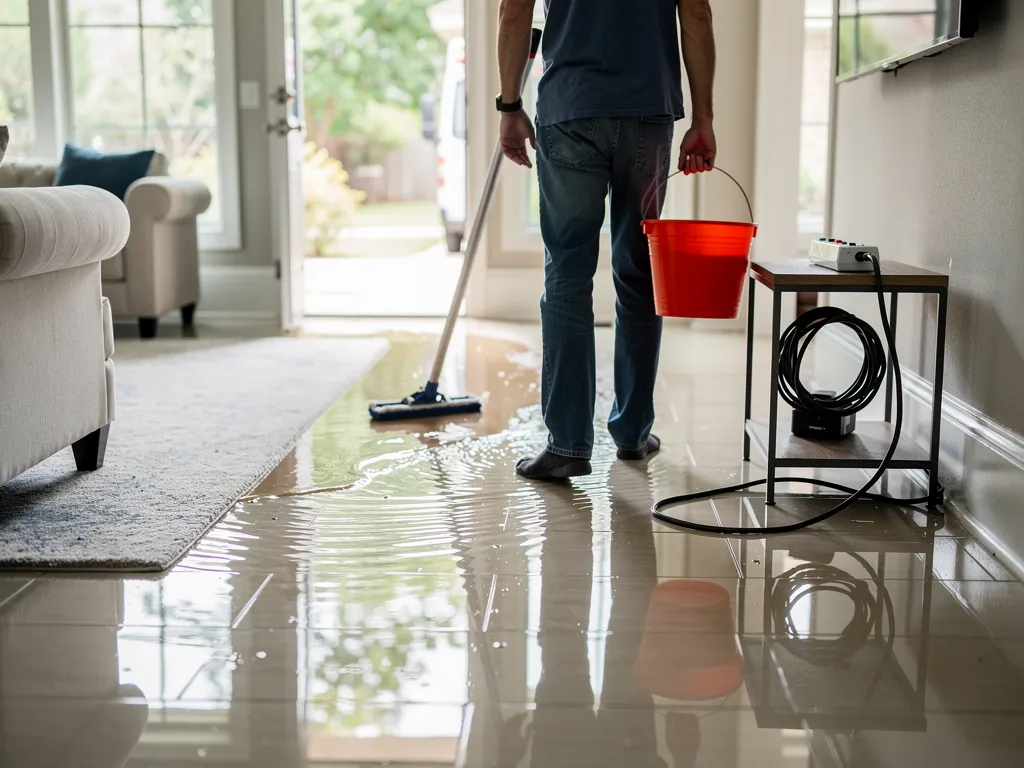
The first sixty minutes after a pipe bursts or floodwater enters a Houston home determine whether repairs stay simple or turn into a full structural rebuild. Spreading water never waits for a convenient moment, and treating it as a minor issue costs homeowners far more in the long run. We built our best emergency procedures for water damage around three priorities: safety, containment, and getting professional help moving fast.
Homeowners facing rising water should skip the wait-and-see approach entirely. Acting within minutes, not hours, limits how far moisture travels into flooring, drywall, and furniture. Here is the sequence we recommend:
Stop the water source if doing so is safe, whether that means shutting off a supply valve or turning off the main water line.
Avoid electrical hazards by staying clear of outlets, appliances, and light fixtures near standing water.
Move family members and pets away from any water that may be contaminated, including backups or floodwater.
Call a qualified restoration team immediately rather than attempting extraction alone.
Why Does Every Minute Count in Houston?
Gulf Coast storms bring heavy rainfall that overwhelms drainage systems fast, and rising water from Buffalo Bayou during major weather events turns a small household leak into a property-wide emergency. High-rise and mid-rise buildings across Houston compound this risk, since a single failure can affect multiple floors before anyone notices.
What Should We Expect When Help Arrives?
Our team responds quickly once contacted, bringing certified expertise and financing support for homeowners facing urgent repairs. We focus on assessing the source, containing spread, and beginning restoration without unnecessary delay, so families regain a safe, dry home sooner rather than later.
How Should You Extract Water and Log the Damage?
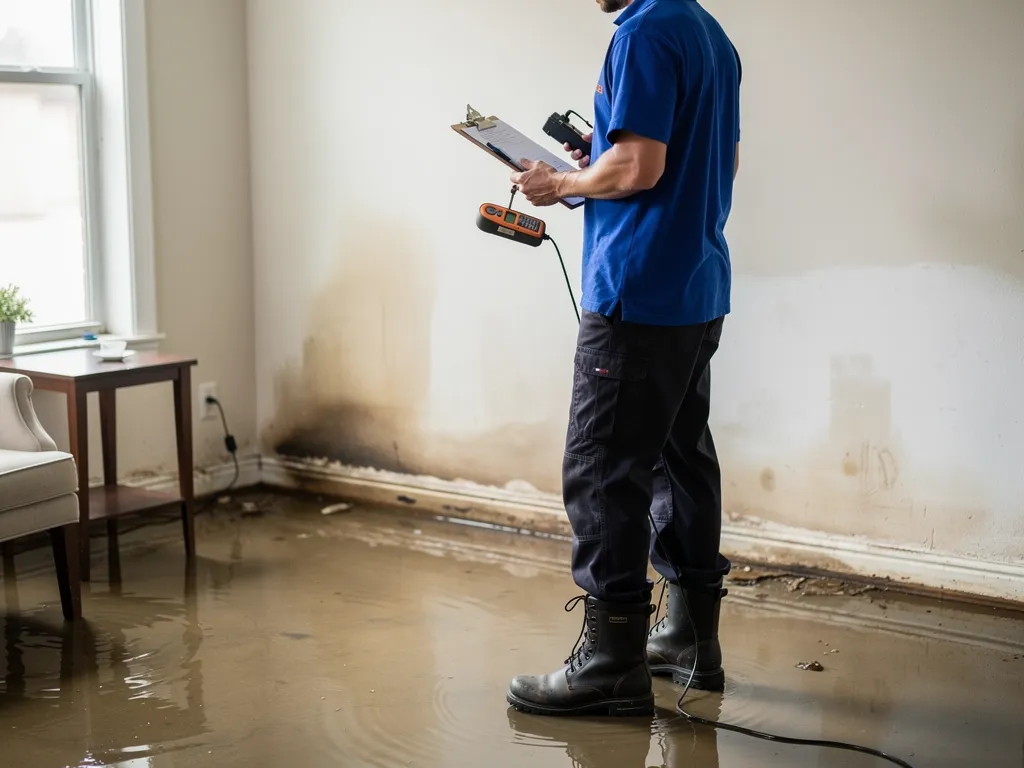
Removing standing water and documenting damage together form the backbone of effective recovery for Houston properties. Speed matters, but so does precision: skipping either step invites hidden moisture, mold growth, and denied insurance claims. Our technicians treat extraction and documentation as one continuous process, not two separate tasks.
Before beginning, we confirm the water source is stopped and the area is safe to enter. Once conditions allow, the best emergency procedures for water damage follow a clear sequence:
Assess every affected room, including closets, baseboards, and under-cabinet spaces.
Extract standing water using professional-grade pumps and vacuums.
Scan walls, flooring, and cabinetry with moisture meters to locate hidden dampness invisible to the naked eye.
Establish a structured drying plan based on what the inspection reveals.
Photograph and record each stage of the restoration for the homeowner’s file.
Advanced inspection, extraction, and drying equipment allows us to catch saturation that a visual check alone would miss, particularly behind drywall and under flooring common in Houston construction. This step prevents damage from resurfacing weeks later as warped wood or musty odors.
Why does documentation matter as much as extraction?
Thorough records of moisture readings, affected materials, and drying progress give Houston homeowners a clear paper trail. Insurance adjusters rely on this documentation to evaluate claims accurately, which speeds approval and reduces disputes over coverage.
What happens if extraction is delayed?
Delayed extraction lets water migrate into flooring, drywall, cabinets, and furniture, often beyond simple repair. Acting within the first hours after discovery limits structural damage and keeps restoration costs lower for the household.
How Does Restoration Work in Houston Homes?
Restoration in Houston homes follows a defined sequence: crews measure moisture, identify the water category, then dehumidify, extract, and dry the structure. Skipping any of these steps leaves hidden moisture behind, and hidden moisture becomes mold within days. That gap between a leak and a proper dry-out is where the best emergency procedures for water damage matter most. Every hour of delay raises repair costs and health risks.
Our approach follows a set order once we reach a property:
Assess moisture levels throughout affected walls, floors, and cabinetry using moisture meters and thermal imaging.
Classify the water source to determine contamination risk, since a clean supply-line break behaves differently than a sewage backup.
Extract standing water with pumps and industrial vacuums before it spreads further into subfloors.
Dehumidify and dry the structure completely, preventing the trapped moisture that feeds mold growth.
What Should Houston Homeowners Do Immediately After a Leak?
Shut off the water source first, then move furniture and belongings away from the affected area. We respond to plumbing failures, appliance leaks, roof intrusion, storm damage, overflowing fixtures, and sewage backups across Houston properties, and calling promptly limits how far water travels through flooring and drywall.
Which Houston Neighborhoods Does Restoration Service Cover?
Our crews reach homes throughout Midtown, Memorial, the Museum District, River Oaks, Montrose, the Heights, and Uptown. No single Houston zip code is too far when a pipe bursts overnight.
Water damage rarely ends with dry carpet. Once structural drying finishes, Team Home Solutions follows with mold inspections, targeted remediation, air duct cleaning, and reconstruction, restoring the home fully rather than leaving root causes unresolved.
What Mistakes Delay Recovery After Flooding?
Waiting to act ranks as the single costliest mistake Houston property owners make after a flood. Standing water spreads fast through drywall, flooring, and cabinetry, and every hour of delay compounds the damage. In Houston’s high-rise and mid-rise buildings near the Galleria. Uptown, a single unresolved leak can affect many floors before anyone notices the source. Property managers who postpone drying or skip professional assessment often watch a contained issue turn into a building-wide problem.
Another common error involves stopping at surface-level drying. Carpets may look dry within a day. Moisture trapped beneath flooring and inside wall cavities creates ideal conditions for mold growth within 24 to 48 hours. We solve mold problems at the root level once water damage has been resolved, backed by a peace of mind guarantee. Surface drying alone rarely addresses what’s hiding underneath.
Why does mold follow water damage so quickly?
Moisture left inside walls, subfloors, or HVAC systems feeds mold colonies almost immediately after a flood. As Houston’s mold remediation experts, we provide certified remediation services built for Northwest Houston homeowners, with fast response and finance support available.
Homeowners and property managers should avoid these recovery mistakes:
Delaying water extraction beyond the first 24 hours.
Ignoring hidden moisture behind walls or under flooring.
Skipping a certified mold inspection after drying.
Assuming insurance handles remediation automatically without documentation.
Frequently Asked Questions
What should I do first when I discover water damage in my Houston home?
Shut off the water source at the main valve or appliance connection, then cut power to any affected rooms if outlets or fixtures are near standing water. Move family members and pets away from the area, photograph the damage for insurance purposes, and contact a restoration team for rapid assessment and extraction.
How quickly does water damage turn into mold in Houston homes?
Moisture trapped behind walls, under flooring, or inside HVAC systems can create ideal conditions for mold growth within 24 to 48 hours. That is why extraction and thorough drying need to happen in the first hours after a leak or flood, not just surface-level drying.
Will my homeowner’s insurance cover water damage restoration?
Coverage depends on the cause and your specific policy, but detailed documentation, photos, moisture readings, and a record of the restoration process, gives adjusters what they need to evaluate a claim accurately. We document every stage of extraction and drying to support your claim.
Which Houston neighborhoods does Team Home Solutions serve for emergency water damage?
We respond to homes throughout Midtown, Memorial, the Museum District, River Oaks, Montrose, the Heights, Uptown, and surrounding Houston areas, including high-rise and mid-rise buildings near the Galleria.
What happens after the water is extracted and the structure is dry?
Once structural drying is complete, we follow up with mold inspections, targeted remediation, air duct cleaning, and reconstruction as needed, addressing root causes rather than just the visible damage.
Conclusion
In closing, swift action during water damage emergencies protects your Houston home from costly mold growth and structural compromise. By following these procedures and addressing moisture promptly, you safeguard your property and family’s health. When professional intervention becomes necessary, our certified technicians stand ready to deliver thorough remediation and reconstruction services that restore your home to its original condition. Trust the expertise of your locally owned mold specialists to guide you through recovery with transparent communication and guaranteed results.