
Professional mold removal in Houston starts with a mold inspection, followed by containment, source removal, and restoration. Team Home Solutions’ certified technicians serve Northwest Houston and surrounding suburbs, removing mold at its source and backing the work with a peace of mind guarantee.
What is the professional mold removal process in Houston?
Professional mold removal in Houston follows a structured, five-step protocol designed to eliminate contamination at its source. Mold can rapidly infest a property within 48 hours after water damage or persistent moisture, making swift, methodical action essential. Without immediate containment, spores spread through HVAC systems and wall cavities, multiplying the scope and cost of remediation.
How does a professional mold inspection work in Houston?
Our process begins with a comprehensive inspection using advanced moisture detection, thermal imaging, and air quality testing. These tools locate hidden colonies behind walls, under flooring, and inside ductwork that visual inspection alone misses. Mold requires moisture and oxygen to grow, entering properties through windows, vents, or hitching rides on clothing and pets. Identifying every moisture source prevents recurrence after remediation concludes.
What are the key steps in Houston mold remediation?
Containment and safety setup. We seal affected areas with polyethylene sheeting and establish negative air pressure. This prevents cross-contamination to clean rooms during removal.
Source elimination and material removal. Technicians physically remove mold-colonized drywall, insulation, and carpeting. Porous materials with deep-rooted growth cannot be salvaged and require proper disposal.
Antimicrobial application and air cleaning. We treat remaining structural surfaces with EPA-registered antimicrobials. HEPA air scrubbers run continuously to capture airborne spores, reducing counts to safe levels.
Moisture correction and reconstruction. The underlying water source gets repaired before any rebuilding begins. We then restore removed materials, returning the property to its pre-loss condition.
Post-remediation verification. Final clearance testing confirms spore counts match or fall below outdoor control samples. This step validates that the environment is safe for occupancy.
Suspecting mold warrants a prompt inspection by a certified professional. Delaying allows colonies to expand behind finishes where damage compounds silently. Our Houston mold remediation guide walks through what to expect at each phase and how to prepare your home before our team arrives.
How do professionals contain mold during removal?
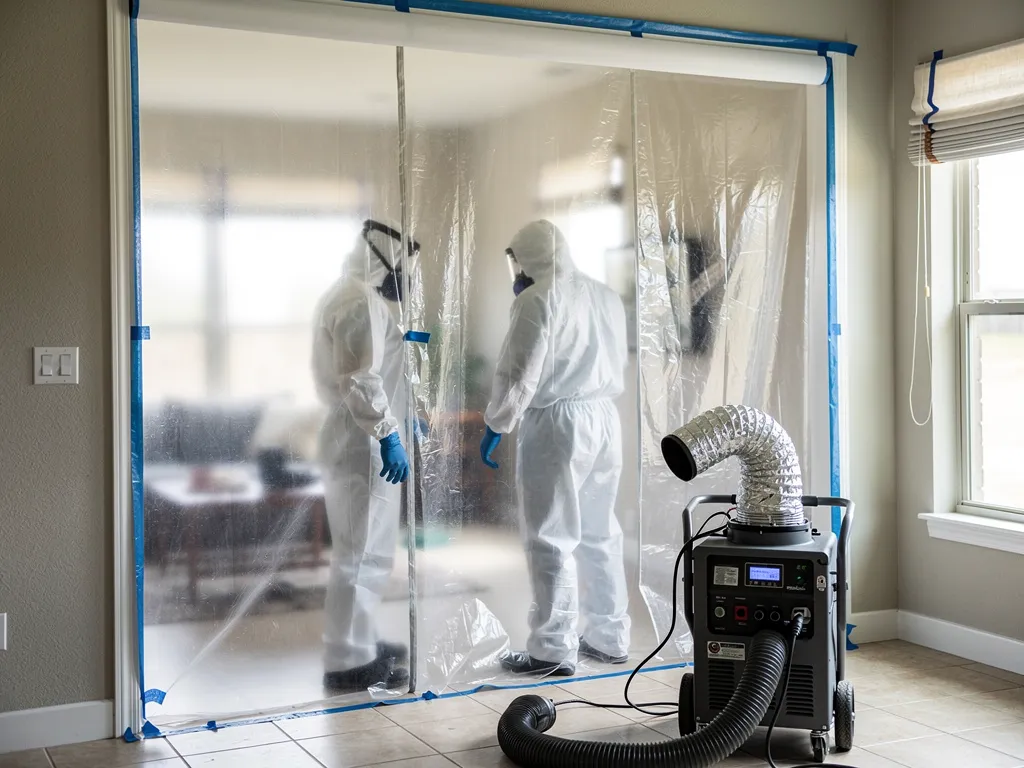
Professional mold containment prevents invisible spores from spreading into clean areas of a Houston home. Mold releases airborne spores that can infest a property within 48 hours, so containment is the first critical step in the professional mold removal process Houston homeowners rely on.
We establish containment before any mold is disturbed. Disturbing mold without barriers sends spores into HVAC systems, hallways, and bedrooms. Our technicians use specialized mold remediation equipment to seal off the work area completely.
What containment methods do professionals use?
We follow a strict sequence for every Houston mold removal project:
Seal the work area with heavy-gauge polyethylene sheeting over doorways, vents, and any openings.
Create negative air pressure using HEPA-filtered air scrubbers that pull contaminated air outward.
Disable HVAC systems serving the affected zone to prevent cross-contamination through ductwork.
Establish a decontamination zone where technicians remove protective gear before exiting.
Bag and seal contaminated materials inside the containment area before transport.
Why is containment necessary before mold removal?
Containment protects the rest of the home from airborne spores. Mold requires moisture and oxygen to grow, and spores entering a new damp area start a second infestation. Without proper barriers, a single disturbed colony spreads throughout the property.
Our approach removes mold at its source and restores a healthier home. The containment phase makes that outcome possible. For a detailed walkthrough of the full process, see our complete mold remediation guide covering inspection through restoration.
How long does containment stay in place?
Containment remains until remediation and clearance testing are complete. We never remove barriers early. Premature removal risks reintroducing spores into cleaned spaces and undoing the entire job.
What steps follow mold removal in Houston?
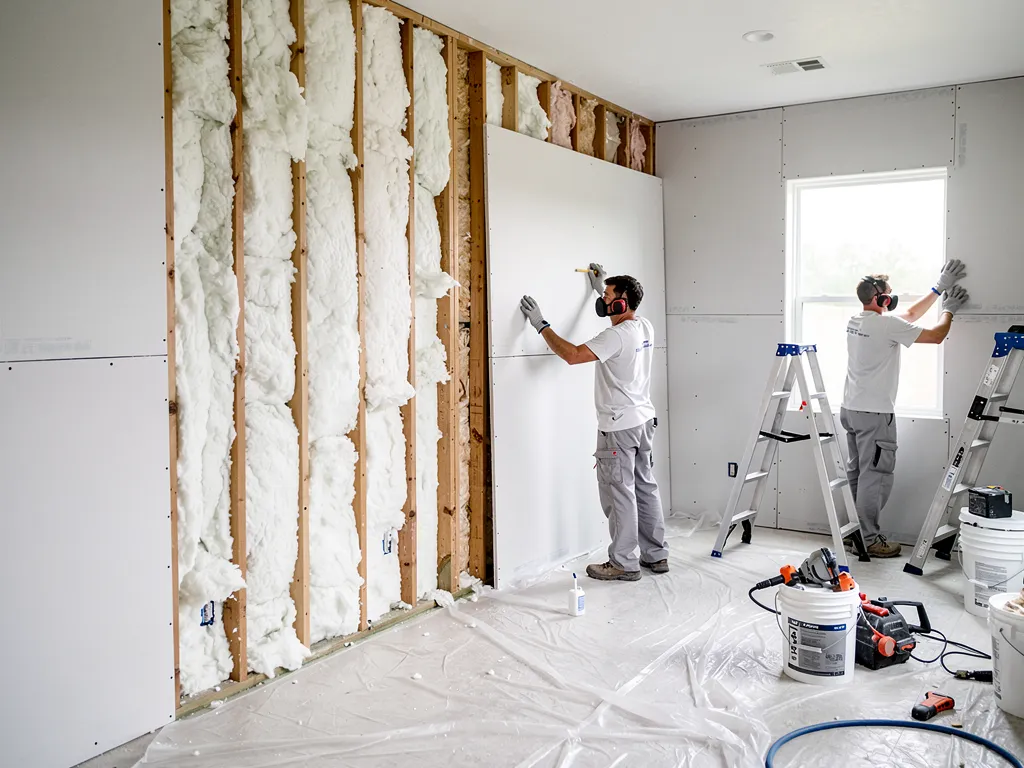
Mold removal addresses the immediate contamination. The steps that follow focus on repairing damage and preventing recurrence. Without these critical post-removal measures, the underlying conditions that caused the mold remain active, and structural integrity stays compromised. Finding mold signals broader issues like hidden leaks and persistent water damage, according to Paul Davis. We treat these root causes to deliver a complete solution.
How is the source of moisture permanently fixed?
Our team identifies and repairs the water intrusion that fed the mold. This often involves fixing plumbing leaks, sealing foundation cracks, or improving drainage around the property. We complete these repairs before any cosmetic work begins. A dry environment is the only guarantee against regrowth.
What does property restoration include after mold cleanup?
Restoration returns your Houston home to its pre-mold condition. The process involves several sequential steps:
Remove unsalvageable materials. We cut out and dispose of drywall, insulation, or carpeting that mold has structurally damaged.
Install new building materials. Our crew hangs new drywall, lays fresh insulation, and installs new flooring to match the existing space.
Reconstruct affected areas. We rebuild damaged rooms, from framing to finish carpentry, ensuring every element is secure and code-compliant.
Our contractors handle every part of mold damage remediation, including these comprehensive repairs and restoration services. This full-scale approach distinguishes a true professional mold removal process in Houston from a simple surface cleaning.
Does the process include HVAC system restoration?
Yes, it does. Mold spores circulate through air ducts and settle inside HVAC components. We clean and sanitize the entire system, including plenums and air handlers, to eliminate residual contamination. This step prevents the system from re-distributing spores throughout your home. Our Houston mold remediation services include this critical HVAC component.
We finish with a final clearance inspection. This confirms that spore counts have returned to normal background levels. The result is a structurally sound, healthy home with the moisture source permanently eliminated.
How does Houston’s humidity affect mold remediation?
Houston’s humidity accelerates mold growth and complicates every phase of remediation. Mold requires moisture to grow, and Houston’s subtropical climate provides a near-constant supply. Without aggressive moisture control during remediation, colonies rebound within 48 hours.
Our professional mold removal process Houston homeowners rely on begins with understanding this climate reality. Mold and mildew flourish in damp places, so finding visible growth signals hidden moisture problems like leaks or condensation inside wall cavities. We solve mold problems at the root level by addressing both the fungal contamination and the water source feeding it.
Why does humidity make containment harder during remediation?
Containment barriers trap humid air alongside disturbed spores. We deploy commercial dehumidifiers inside containment zones to dry the air before disturbing any colonized materials. This prevents spore aerosolization from overwhelming the workspace. Negative air pressure then routes filtered exhaust outside, keeping cross-contamination risk minimal despite Houston’s heavy outdoor humidity.
What extra steps does Houston require for successful remediation?
Three climate-specific protocols protect your home during our process:
Pre-remediation drying: We run industrial dehumidifiers for 24 to 48 hours before starting physical removal, pulling moisture from affected drywall and framing.
Continuous humidity monitoring: Digital hygrometers track conditions hourly inside containment. We adjust equipment output as outdoor humidity shifts.
Post-remediation verification: Clearance testing confirms spore counts match outdoor baselines. We also verify that structural materials register at safe dryness levels before reconstruction begins.
Skipping these steps leaves behind conditions mold exploits. Our certified technicians deliver fast response times and finance support, ensuring Houston’s climate never compromises your home’s long-term safety.
When should you call a mold remediation expert?
Mold poses a significant risk in Houston homes with recent water damage or persistent moisture. A professional mold removal process in Houston should begin the moment visible growth appears or a musty odor lingers.
We recommend calling our team immediately when any of these conditions exist:
Visible mold growth on walls, ceilings, baseboards, or HVAC vents
A persistent musty smell that does not clear with ventilation
Recent water damage from a leak, flood, or condensation issue
Health symptoms that worsen indoors, such as coughing, sneezing, or respiratory irritation
Mold can rapidly infest a property within 48 hours of moisture exposure. Waiting even a few days allows spores to spread through invisible air currents into rooms that were previously unaffected.
How fast can mold spread in a Houston home?
Mold establishes itself within 48 hours of water exposure. Houston’s humidity accelerates this timeline, especially after storms or plumbing failures. Our certified technicians offer fast response times to contain the problem before it expands.
What if I am not sure the problem is serious?
Uncertainty is common. We provide thorough inspections that identify hidden moisture sources and confirm whether remediation is necessary. Our locally owned, family-operated team prioritizes transparent communication, so you receive an honest assessment rather than an unnecessary service recommendation. For a deeper look at identifying mold signs and understanding Houston’s moisture challenges, our home mold remediation guide walks through the warning indicators step by step.
Finance support is available, and our team stands ready to help today.
Frequently Asked Questions
How long does the mold removal process take in a Houston home?
Timelines vary with the scope of contamination, but our process always follows the same sequence: inspection, containment, source removal, antimicrobial treatment, moisture correction, and clearance testing. In Houston’s climate, we often run industrial dehumidifiers for 24 to 48 hours before physical removal begins, which adds time upfront but prevents the colony from rebounding mid-project.
What makes mold remediation different in Houston compared to drier climates?
Houston’s subtropical humidity keeps feeding mold even after visible growth is removed, so our process adds climate-specific steps that drier regions don’t need: pre-remediation drying, continuous hygrometer monitoring inside containment, and dryness verification on structural materials before any reconstruction starts.
Will you repair the water source that caused the mold, or just remove the growth?
We repair the underlying water intrusion, whether that’s a plumbing leak, a foundation crack, or poor drainage, before any cosmetic work begins. Removing mold without fixing the moisture source only invites it back, so this step is part of every project we complete.
Does the remediation process include cleaning my HVAC system?
Yes. Mold spores travel through air ducts and settle inside plenums and air handlers, so we clean and sanitize the entire HVAC system as part of the process. This keeps the system from redistributing spores once remediation is finished.
How do I know if I need professional mold remediation instead of DIY cleanup?
Visible growth on walls or vents, a musty smell that lingers after ventilating, recent water damage, or worsening respiratory symptoms indoors are all signs it’s time to call a certified team. Mold can establish itself within 48 hours of moisture exposure, so we recommend a professional inspection as soon as any of these signs appear rather than waiting to see if it spreads.
Conclusion
A professional mold removal process in Houston addresses both the contamination and the climate conditions that sustain it. From containment and pre-remediation drying to HVAC restoration and final clearance testing, every step works together to deliver a complete solution. The decision to act now prevents further spread and protects your home’s long-term safety.