
When it comes to How Can I Tell if I Have Mold in My Home?, common indicators of mold growth in a home include musty odors, visible dark or fuzzy patches on walls and ceilings, peeling paint, and persistent allergy symptoms among occupants. Team Home Solutions, serving Northwest Houston and surrounding suburbs, identifies these root-level problems through certified inspections and restores healthier homes with a peace of mind guarantee.
Musty odors, water stains, and unexplained allergy flare-ups often signal hidden growth long before a visible patch appears. Homeowners frequently dismiss these clues until symptoms worsen or damage spreads further. Learning to tell if mold is present in a home starts with watching both physical changes and health reactions closely.
Mold causes real health problems, particularly for household members with allergies or asthma. Persistent coughing, sinus congestion, or headaches that ease once someone leaves the house often point to mold hiding nearby.
Mold reaches beyond a cosmetic nuisance, too. Left unchecked, it weakens wood framing, drywall, and insulation while continuing to harm indoor air quality and overall health.
Catching these early signs of mold in a house makes a measurable difference. Acting quickly keeps a small colony from turning into a larger, far costlier infestation.
What Are the Most Common Signs of Mold at Home?
Several indicators consistently show up before mold becomes obvious to the eye:
Musty, earthy odors in bathrooms, basements, or closets
Dark spots or discoloration on walls, ceilings, or grout lines
Warped, bubbling, or peeling paint and wallpaper
Allergy symptoms that ease when away from the house
Past leaks, flooding, or lingering humidity in certain rooms
Musty, earthy odors in bathrooms, basements, or closets
Dark spots or discoloration on walls, ceilings, or grout lines
Warped, bubbling, or peeling paint and wallpaper
Allergy symptoms that ease when away from the house
Past leaks, flooding, or lingering humidity in certain rooms
When Should Homeowners Call in a Mold Professional?
Persistent symptoms or visible growth following a leak call for professional evaluation, not guesswork. We recommend scheduling an inspection whenever moisture problems linger for more than a day or two.
Team Home Solutions serves Northwest Houston and the surrounding suburbs as a locally trusted mold expert. Our technicians identify problems at the source, restoring a healthier home and genuine peace of mind.
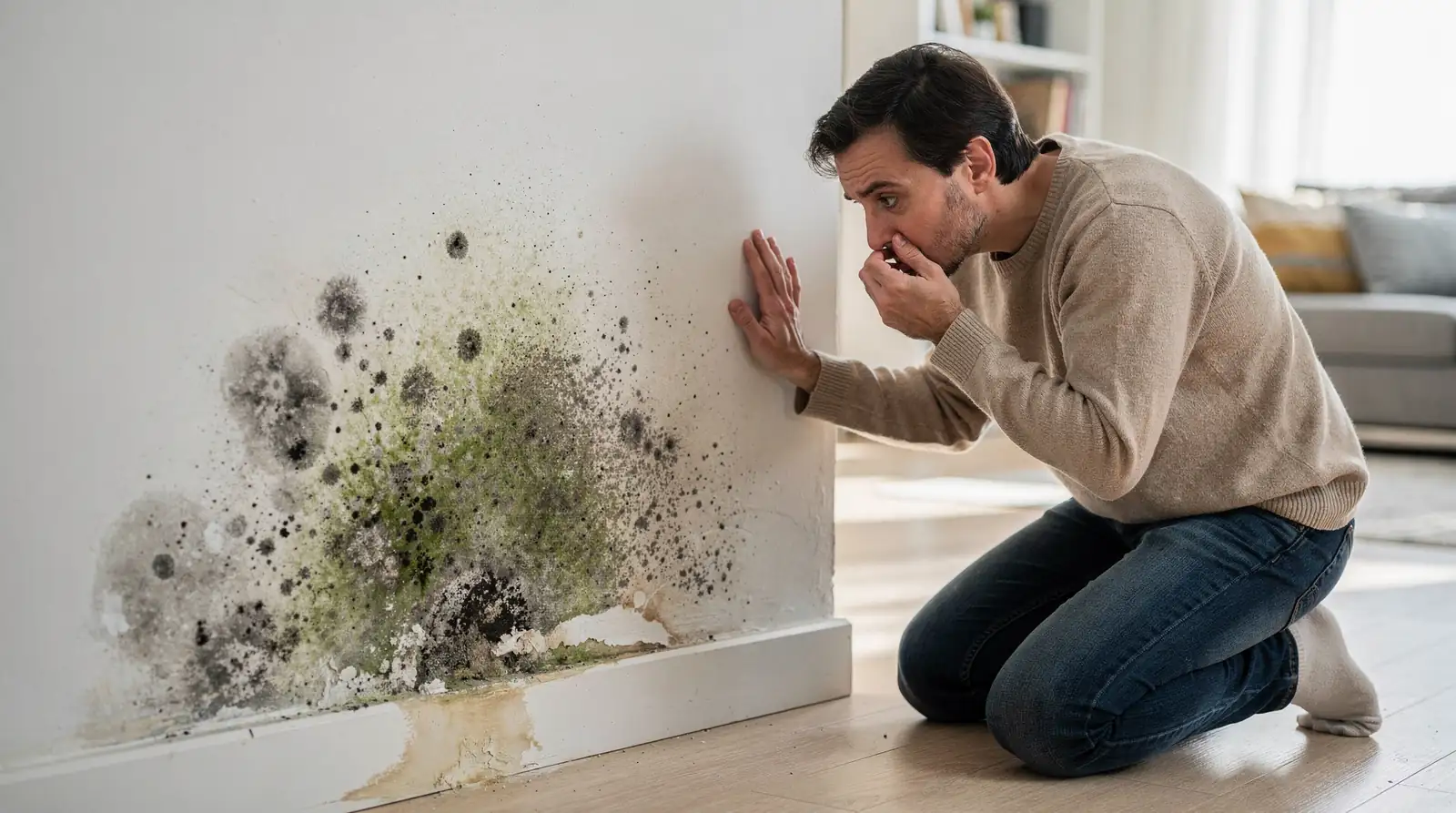
What Does Mold Look and Smell Like at Home?
Mold reveals itself through fuzzy, discolored patches — black, green, white, or orange — clustered in the darkest, dampest corners of a house. Musty, earthy odors often arrive before any visible growth appears, especially in closets, basements, and bathrooms with poor airflow. We treat both signals, sight and smell, as equally important when evaluating a property for hidden colonies.
Mold behaves like most fungi: it breaks down plant and animal matter for nourishment. That’s why we so often find it clinging to organic household materials. Wood trim, drywall paper, cardboard boxes, upholstery, and even leather. Wherever moisture meets an organic surface, growth has room to establish itself.
Where in a home does mold usually appear first?
Mold spreads almost anywhere moisture and organic material meet, which explains why homes rarely have just one problem spot. Common areas include:
Under sinks and around plumbing fixtures
Behind refrigerators and washing machines
Window sills and frames after condensation
Attic insulation near roof leaks
Basement walls and stored cardboard
Under sinks and around plumbing fixtures
Behind refrigerators and washing machines
Window sills and frames after condensation
Attic insulation near roof leaks
Basement walls and stored cardboard
Because organic material exists throughout nearly every room, no single space stays permanently immune.
Why does mold seem to appear out of nowhere?
Spores already exist inside every home, waiting for the right conditions. Once enough moisture accumulates on a surface, those dormant spores activate and colonize almost overnight. That sudden appearance often catches homeowners off guard — a clean wall one week, a visible patch the next.
Our technicians investigate beyond the surface stain. Visible growth usually signals a larger moisture source behind walls or under flooring. Recognizing whether mold has developed inside a home takes more than a quick glance. It requires checking texture, color, and odor together. When any of these signs persist, professional inspection determines the true extent of the problem.
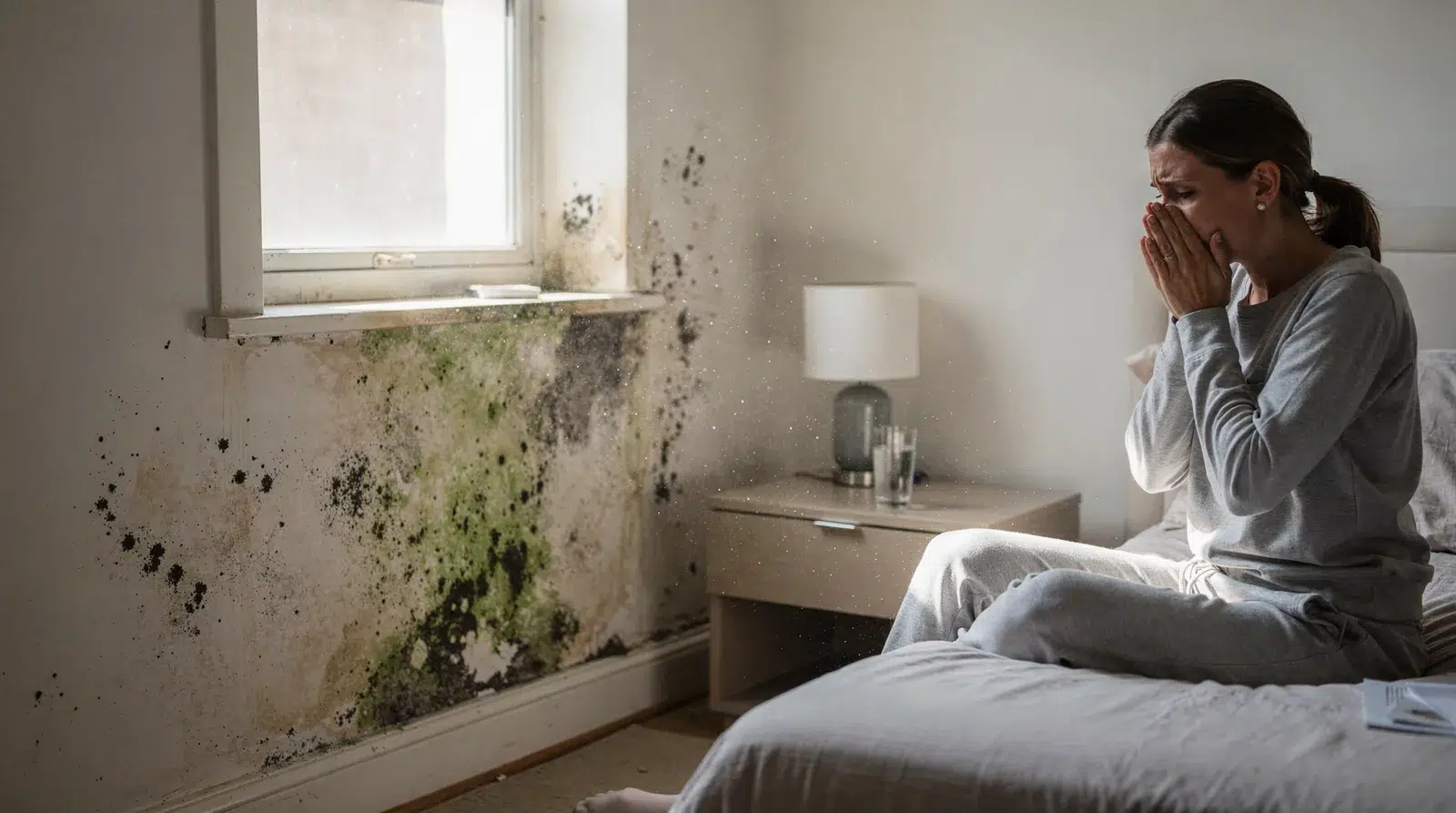
Can Mold in Your Home Make You Sick?
Yes, mold growing inside a home can trigger real health symptoms, not just cosmetic damage. We treat every case as a potential health issue, because untreated colonies keep releasing spores day after day. Left unaddressed, exposure grows worse the longer moisture and mold sit inside your walls, ducts, or flooring.
How can I tell if I have mold in my home based on how I feel, not just what I see? Physical symptoms often show up before visible staining does. Mold spores irritate the throat and airways, so a scratchy throat or a dry, lingering cough that won’t quit deserves attention. Residents with asthma face added risk, since mold ranks among the most common indoor asthma triggers. We routinely hear from homeowners whose asthma symptoms worsen indoors and improve once they step outside.
Does leaving the house and feeling better mean mold is the cause?
Often, yes. When symptoms ease away from home and return shortly after walking back in, that pattern points toward mold exposure. We consider this timing one of the clearest self-check signals a homeowner can track before scheduling a professional inspection.
Beyond respiratory irritation, mold exposure causes allergic reactions and infections in certain individuals, particularly those with weakened immune systems or existing sensitivities. Watch for these patterns in your household:
Cough or throat irritation that returns nightly
Asthma flare-ups concentrated in one room
Allergy symptoms that fade during travel or work hours
Recurring infections without another clear cause
Cough or throat irritation that returns nightly
Asthma flare-ups concentrated in one room
Allergy symptoms that fade during travel or work hours
Recurring infections without another clear cause
None of these signs confirm mold on their own. Together, though, they build a case worth investigating further.
What Hidden Signs Point to a Mold Problem?
Hidden mold problems trace back to one root cause: uncontrolled moisture. Identifying and controlling water intrusion early stands as the single most effective way to keep mold from taking hold inside a home. Homeowners asking how can I tell if I have mold in my home often overlook the moisture sources feeding growth behind walls, under flooring, or inside crawl spaces.
We trace most hidden infestations back to a handful of common culprits:
Roof leaks that go unnoticed above insulation or drywall
Plumbing leaks inside walls or under sinks
Poor drainage around the foundation
Damp basements and crawl spaces with limited airflow
Steam buildup from cooking, showering, or laundry areas
Roof leaks that go unnoticed above insulation or drywall
Plumbing leaks inside walls or under sinks
Poor drainage around the foundation
Damp basements and crawl spaces with limited airflow
Steam buildup from cooking, showering, or laundry areas
How fast does mold actually grow after a leak?
Growth starts fast. Within a day or two after a leak or spill, mold colonies can already establish themselves, especially in older homes with original plumbing or aging roof materials. Waiting even a few days to investigate a damp spot gives mold the head start it needs to spread.
Can mold spread to other rooms on its own?
Yes, and this is where hidden problems compound. Mold reproduces by releasing spores, which travel through the air, ride on moving water, or hitch a ride on pets moving room to room. A leak contained to one closet can seed mold growth in a bedroom or hallway within days.
We recommend treating any unexplained dampness, musty smell, or discoloration as an early warning sign, not a cosmetic nuisance. Our certified technicians travel throughout Home to inspect these hidden moisture pockets before they become larger structural and health concerns.
When Should You Call a Mold Professional?
Professional help becomes necessary the moment mold growth exceeds a small, surface-level patch that ordinary cleaning can handle. Left untreated, hidden colonies spread behind walls, under flooring, and inside air ducts throughout a home, turning a minor nuisance into a costly structural problem. We believe homeowners deserve a clear line between do-it-yourself cleanup and situations that call for certified expertise.
How do I know a mold problem is too big to handle myself?
If staining covers more than a small patch, if odors persist after cleaning, or if symptoms return once you’re back inside your home, the issue likely extends beyond what surface cleaning can fix. At that point, taking action yourself often means treating the problem you can see while missing the moisture source feeding it. We recommend bringing in a professional as soon as those signs appear, rather than waiting for visible damage to worsen.
What does a professional mold service actually check?
Our team conducts mold inspections using advanced moisture detection, thermal imaging, and air quality testing to pinpoint mold at its source, not just where it happens to surface. This approach lets us identify hidden moisture pockets behind drywall, beneath flooring, and within HVAC systems before remediation begins.
As Houston’s #1 mold remediation experts, we offer complete, certified remediation services built around the needs of Northwest Houston homeowners, with fast response times and financing support available. We’re locally owned and family-operated, and that matters here. Transparent communication, prompt scheduling, and guaranteed satisfaction guide every job we complete. When mold symptoms return again and again, don’t wait. A thorough inspection resolves the uncertainty and protects both your home and your family’s health.
Conclusion
In closing, recognizing the signs of mold in your home empowers you to take swift action before the problem escalates. Team Home Solutions stands ready to address your concerns with thorough mold inspections and certified remediation services that solve problems at the root level. Our locally trusted expertise across Northwest Houston and surrounding suburbs ensures your home receives the professional attention it deserves. Don’t let mold compromise your family’s health or your property’s integrity—reach out to our team today for the peace of mind guarantee that comes with comprehensive, ethical service.