
What Are the Health Risks Associated With Mold in Air Ducts?
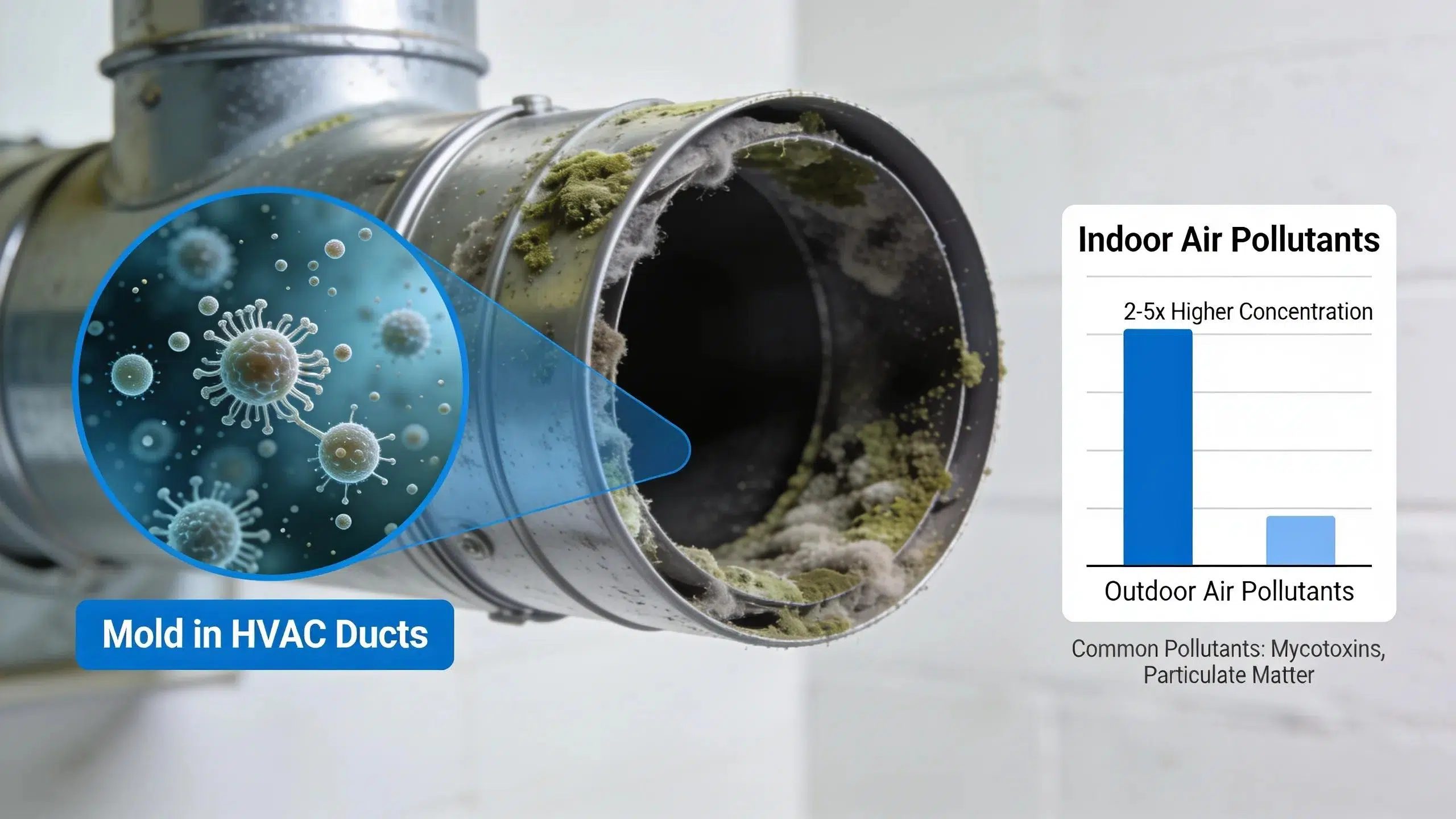
When it comes to What Are the Health Risks Associated With Mold in Air Ducts?, mold spores circulating through HVAC ducts spike indoor air pollutants to 2 to 5 times outdoor levels, triggering sneezing, coughing, skin irritation, and fatigue. Mitigate risks by hiring professional cleaning—especially critical per EPA guidance when contamination exceeds 10 square feet.
Mold spores circulating through HVAC systems worsen allergies, trigger asthma, and cause respiratory irritation each time the system runs, spreading contamination through musty odors and black streaks near vents. Our certified technicians at Team Home Solutions eliminate mold at its source through professional duct cleaning and remediation, restoring healthier indoor air
Is Mold Really Hiding in Your Air Ducts?
Musty odors near your vents often signal active mold growth inside the ductwork itself. Black streaks around a supply register, worsening allergy symptoms only at home, or a smell that returns after cleaning are all warning signs worth taking seriously. Mold found in air vents is not just cosmetic. It can be toxic and affect your household’s health every time the HVAC system runs. That distinction matters, because ductwork hides problems that a quick visual check will not catch.
We built our practice around solving mold problems at the root level, not just masking symptoms. Northwest Houston homeowners come to us with the same worry: a smell they cannot place and no clear source. Our approach is backed by a peace of mind guarantee. The goal is a genuine fix rather than a temporary patch.
How Do We Confirm Mold Is in the Ducts, Not Just Nearby?
Certified technicians inspect the full HVAC pathway, since mold near a vent does not always mean the ducts are contaminated. Confirming the source correctly prevents wasted work and repeat problems.
What Should Homeowners Do Once They Suspect a Problem?
Acting quickly limits the spread of spores through the system. Our certified technicians offer fast response times and finance support, so help is available without long delays. Warning signs worth acting on include:
Persistent musty smell when the HVAC system cycles on
Visible dark spots at vent covers or grilles
Allergy or respiratory symptoms that ease when away from home
Recent water leak or high indoor humidity near ductwork
Persistent musty smell when the HVAC system cycles on
Visible dark spots at vent covers or grilles
Allergy or respiratory symptoms that ease when away from home
Recent water leak or high indoor humidity near ductwork
What Health Risks Come From Moldy Air Ducts?
Moldy ductwork poisons the air quality inside a home, sometimes pushing indoor pollutant levels two to five times higher than what exists outdoors. Every cycle of the HVAC system pulls those contaminated particles through the vents and into the rooms where families sleep, eat, and breathe. We treat this as a health issue first, not just a maintenance headache. The risks compound the longer contamination sits untreated.
Health risks associated with mold in air ducts center on continuous exposure. A contaminated HVAC system doesn’t release spores once and stop; it circulates them nonstop, throughout every room the ductwork reaches. That ongoing exposure is what separates duct mold from a small bathroom spot — it becomes a whole-house problem.
What symptoms suggest mold exposure from HVAC ducts?
Sneezing, coughing, skin irritation, and fatigue top the list of symptoms tied to circulating mold spores. These reactions often worsen indoors and ease when someone leaves the house, which is a telling clue.
Symptom
Why It Happens
Sneezing and coughing
Spores irritate airway passages with each HVAC cycle
Skin irritation
Direct contact with airborne mold particles
Fatigue
Ongoing immune response to repeated exposure
How do we find out if ducts are the actual source?
We don’t guess — we verify. Our inspection process relies on advanced moisture detection, thermal imaging, and air quality testing to locate mold at its source rather than treating surface symptoms. cite-3
This matters because covering up a musty smell with air fresheners never solves the underlying moisture problem. Team Home Solutions is built around addressing mold at the root level, backed by a peace of mind guarantee, so families get a real fix instead of a temporary mask over a growing health risk.
How Can You Spot Mold in Your Ducts?
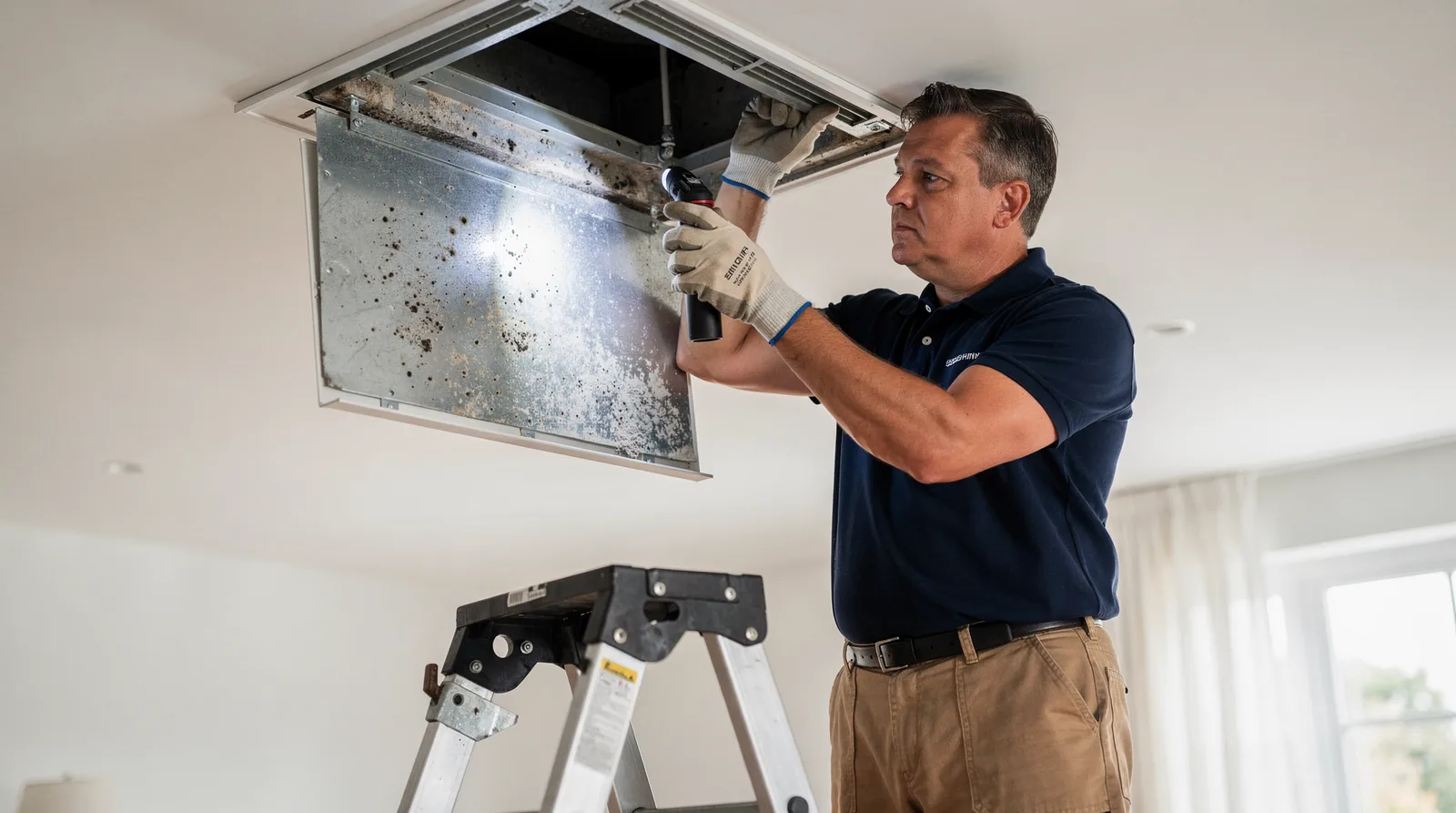
Musty odors and unexplained spotting near vents give away most duct mold problems before they turn serious. HVAC and ventilation systems rank among the most common places for hidden household mold to develop, which means the damage often spreads long before anyone notices a visible sign. We treat these early clues as urgent, not cosmetic, because waiting rarely makes the problem smaller.
A musty smell that returns every time the system cycles on is one of the clearest warning signs we encounter. Dark speckling around vent covers or return grilles points to active growth inside the ductwork itself. Allergy symptoms that flare up indoors but ease outdoors also suggest airborne spores are circulating through the home.
What Happens If Duct Mold Goes Untreated?
Left alone, mold in AC vents damages heating and cooling equipment over time. It also lowers property value and worsens allergy symptoms for anyone breathing that air daily. The longer the growth sits inside the system, the more it spreads with every cycle.
Common Warning Signs We Look For
Persistent musty odor near vents or registers
Visible black, green, or gray spotting on vent covers
Allergy or respiratory symptoms that worsen indoors
Reduced airflow or uneven cooling throughout the home
Recent water leaks or high indoor humidity
Persistent musty odor near vents or registers
Visible black, green, or gray spotting on vent covers
Allergy or respiratory symptoms that worsen indoors
Reduced airflow or uneven cooling throughout the home
Recent water leaks or high indoor humidity
We recommend acting on any single sign rather than waiting for several to appear together. Our certified technicians respond quickly once a homeowner reports musty odors or spotting near vents. Early intervention keeps a small issue from becoming a costly one. cite-3 Professional mold remediation removes mold at its source, restoring healthier air through honest, transparent service from start to finish. cite-3
Which Removal Methods Actually Work?
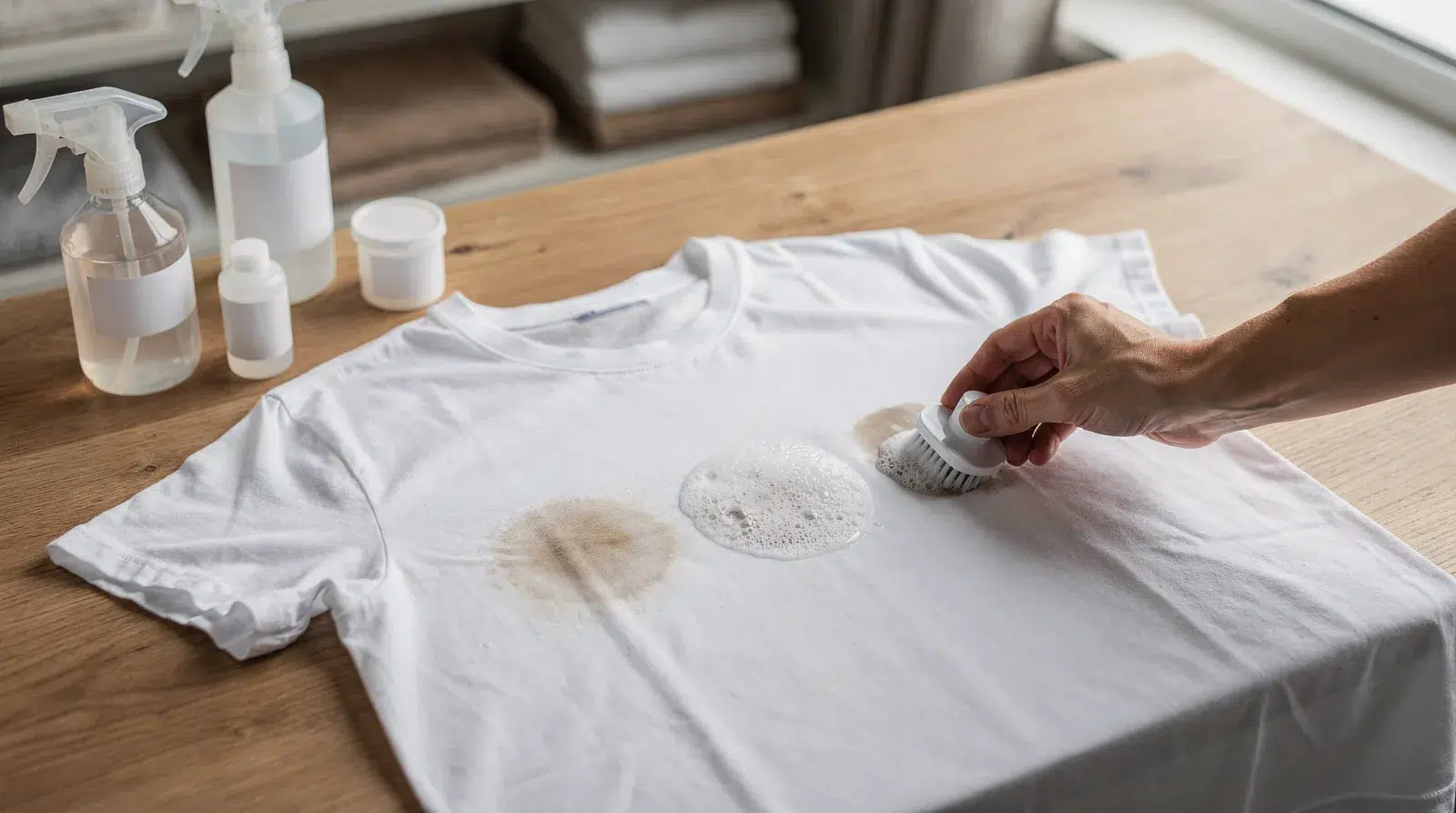
Removal methods split into two camps: quick surface wipes and true source remediation. Surface cleaning masks the problem for a few weeks; source remediation stops mold from returning for good. Our team builds every project plan around eliminating growth at its origin, not simply wiping down what’s visible on a vent cover.
Professional HVAC mold removal targets the components homeowners can’t reach on their own. We design these services to eliminate mold growth from air ducts, plenums, and other HVAC parts, since spores hiding inside metal ductwork keep reseeding the air long after a filter change. cite-3
Do DIY sprays actually get rid of duct mold?
Store-bought sprays kill mold spores sitting in plain view. They rarely reach mold growing inside plenums, coils, or duct seams, so the colony regrows within days. We suggest DIY treatments only for small, exposed patches on hard surfaces — never inside sealed ductwork.
When does a mold problem need a professional instead of a home fix?
The EPA recommends calling in professionals once an infestation covers more than 10 square feet or reaches inaccessible spots like ductwork. Most duct mold meets that threshold immediately. No homeowner can inspect or clean the full length of a duct run. Waiting past that point lets spores multiply and spread through every room the system serves.
Effective remediation follows a clear sequence:
Locate and remove mold at the source, rather than treating symptoms on the surface.
Clean and treat the affected ductwork, plenums, and HVAC components thoroughly.
Apply advanced odor removal treatments where musty smells linger after visible mold disappears.
Confirm the home has returned to a healthier baseline before closing the job.
Locate and remove mold at the source, rather than treating symptoms on the surface.
Clean and treat the affected ductwork, plenums, and HVAC components thoroughly.
Apply advanced odor removal treatments where musty smells linger after visible mold disappears.
Confirm the home has returned to a healthier baseline before closing the job.
Lingering odors after a cleaning often signal unfinished work. We apply advanced odor treatments built for mold, smoke, and other persistent smells. Appearance alone never confirms that indoor air quality has actually improved.
How Can You Prevent Mold From Returning?
Lasting prevention starts with fixing the source of moisture, not just wiping away visible spots. Our team designs every remediation plan to solve mold problems at the root level, and we stand behind that work with a peace of mind guarantee. cite-3 That guarantee matters because even a small colony left behind can affect air quality. Trigger the health risks associated with mold in air ducts once spore concentrations climb, regardless of how minor the growth looks.
Do routine duct inspections actually help?
Yes. Scheduling regular checks catches moisture buildup before it turns into a full infestation. Catching problems early costs less than a large-scale remediation later.
What should homeowners do between professional visits?
Keep humidity levels controlled throughout the home
Replace HVAC filters on a consistent schedule
Watch vents for musty odors or discoloration
Keep humidity levels controlled throughout the home
Replace HVAC filters on a consistent schedule
Watch vents for musty odors or discoloration
Because our certified technicians offer fast response times. Finance support, homeowners can act on warning signs immediately instead of letting moisture problems linger and spread. cite-3
Mold in air ducts poses genuine health risks that demand prompt attention and professional intervention. By understanding these dangers and taking decisive action through inspection. Remediation, you protect your home’s air quality and your family’s wellbeing. Team Home Solutions brings certified expertise to eliminate mold at its source, delivering the thorough, lasting results that transform your indoor environment from a potential health hazard into a safe, clean space you can trust.
Frequently Asked Questions
What are the health risks of mold in air ducts?
Circulating spores from moldy ductwork can push indoor air pollutants to two to five times outdoor levels, triggering sneezing, coughing, skin irritation, and fatigue that often ease once you leave the house.
How can I tell if mold is growing inside the ducts and not just near a vent?
A musty odor that returns every time the HVAC system cycles, dark speckling around vent covers, and allergy symptoms that ease outdoors are strong signs the ductwork itself is contaminated. Our certified technicians confirm the source with moisture detection, thermal imaging, and air quality testing before recommending treatment.
Can I get rid of duct mold with a store-bought spray?
Store-bought sprays only kill spores sitting in plain view. They rarely reach mold growing inside plenums, coils, or duct seams, so a colony hidden in sealed ductwork typically regrows within days.
When does duct mold need professional remediation instead of a DIY fix?
The EPA recommends bringing in professionals once contamination covers more than 13380 Telge Rd Ste 802 feet or reaches inaccessible areas like ductwork — a threshold most duct mold meets immediately, since no homeowner can inspect or clean an entire duct run.
How can I keep mold from coming back after remediation?
Controlling indoor humidity, replacing HVAC filters on a consistent schedule, watching vents for odors or discoloration, and scheduling routine duct inspections all help catch moisture problems before they grow into a new infestation.
Frequently Asked Questions
What are the health risks of mold in air ducts?
Circulating spores from moldy ductwork can push indoor air pollutants to two to five times outdoor levels, triggering sneezing, coughing, skin irritation, and fatigue that often ease once you leave the house.
How can I tell if mold is growing inside the ducts and not just near a vent?
A musty odor that returns every time the HVAC system cycles, dark speckling around vent covers, and allergy symptoms that ease outdoors are strong signs the ductwork itself is contaminated. Our certified technicians confirm the source with moisture detection, thermal imaging, and air quality testing before recommending treatment.
Can I get rid of duct mold with a store-bought spray?
Store-bought sprays only kill spores sitting in plain view. They rarely reach mold growing inside plenums, coils, or duct seams, so a colony hidden in sealed ductwork typically regrows within days.
When does duct mold need professional remediation instead of a DIY fix?
The EPA recommends bringing in professionals once contamination covers more than 13380 Telge Rd Ste 802 feet or reaches inaccessible areas like ductwork — a threshold most duct mold meets immediately, since no homeowner can inspect or clean an entire duct run.
How can I keep mold from coming back after remediation?
Controlling indoor humidity, replacing HVAC filters on a consistent schedule, watching vents for odors or discoloration, and scheduling routine duct inspections all help catch moisture problems before they grow into a new infestation.
Frequently Asked Questions
What are the health risks of mold in air ducts?
Circulating spores from moldy ductwork can push indoor air pollutants to two to five times outdoor levels, triggering sneezing, coughing, skin irritation, and fatigue that often ease once you leave the house.
How can I tell if mold is growing inside the ducts and not just near a vent?
A musty odor that returns every time the HVAC system cycles, dark speckling around vent covers, and allergy symptoms that ease outdoors are strong signs the ductwork itself is contaminated. Our certified technicians confirm the source with moisture detection, thermal imaging, and air quality testing before recommending treatment.
Can I get rid of duct mold with a store-bought spray?
Store-bought sprays only kill spores sitting in plain view. They rarely reach mold growing inside plenums, coils, or duct seams, so a colony hidden in sealed ductwork typically regrows within days.
When does duct mold need professional remediation instead of a DIY fix?
The EPA recommends bringing in professionals once contamination covers more than 13380 Telge Rd Ste 802 feet or reaches inaccessible areas like ductwork — a threshold most duct mold meets immediately, since no homeowner can inspect or clean an entire duct run.
How can I keep mold from coming back after remediation?
Controlling indoor humidity, replacing HVAC filters on a consistent schedule, watching vents for odors or discoloration, and scheduling routine duct inspections all help catch moisture problems before they grow into a new infestation.
Conclusion
Mold in air ducts is never just a cosmetic nuisance — it’s a health issue that grows more serious the longer it sits untreated, spreading spores through every room the HVAC system reaches. Recognizing the warning signs early, from musty odors to dark spotting near vents, gives you the best chance of stopping the problem before it affects your family’s health or your equipment. Team Home Solutions confirms the source, removes mold at its root, and backs every job with a peace of mind guarantee, so you get a lasting fix instead of a temporary mask. If you’re noticing any of these warning signs in your own home, our certified technicians are ready to inspect your ductwork and restore healthier air.